


Last Updated: March 2026 (Updated to reflect current Canadian auto refinancing trends and lender requirements.)
Published: February 2024
By: Danielle Burton
Category: Negative Equity
Auto loan refinance in Canada allows borrowers to replace an existing vehicle loan with a new one that may offer better terms. Many Canadians refinance to lower interest rates, reduce monthly car payments, or adjust their loan to better match their financial situation.
Although the process may involve submitting a loan application, reviewing credit history, and comparing lenders, the concept itself is straightforward. Refinancing replaces your current car loan with a new loan that may offer better repayment terms and a lower overall cost.
Auto loan refinance allows Canadians to replace their current car loan with a new loan that may offer lower interest rates, reduced monthly payments, or better loan terms. By comparing lenders and reviewing your financial situation, refinancing may help improve affordability and long term financial flexibility.
For many borrowers, the benefits can be significant. Lower interest rates and improved loan structures may create meaningful savings while reducing financial pressure on a monthly budget.
Even borrowers with bad credit may qualify for refinancing options if they have stable income or a history of on time payments. Borrowers recovering from negative equity may also find refinancing solutions designed to improve financial control.
In this guide, we explain how auto loan refinance works in Canada, when refinancing makes sense, and how borrowers can maximize the financial benefits of restructuring their vehicle loan.
In This Guide
- 1. What Is Auto Loan Refinance in Canada?
- 2. What Is the Current Landscape of Auto Loan Refinance in Canada?
- 3. How Does Auto Loan Refinancing Affect Your Existing Car Loan?
- 4. How Can You Maximize the Benefits of Auto Loan Refinancing?
- 5. What Other Strategies Can Help Reduce Car Loan Costs?
- 6. Struggling with Car Payments? What Strategies Can You Try?
- 7. Have Questions About Auto Loan Refinance? SafeLend Canada Is Here to Help
- 8. Final Thoughts: Navigating Financial Flexibility With Auto Loan Refinance
- 9. Frequently Asked Questions About Auto Loan Refinance
What Is Auto Loan Refinance in Canada?
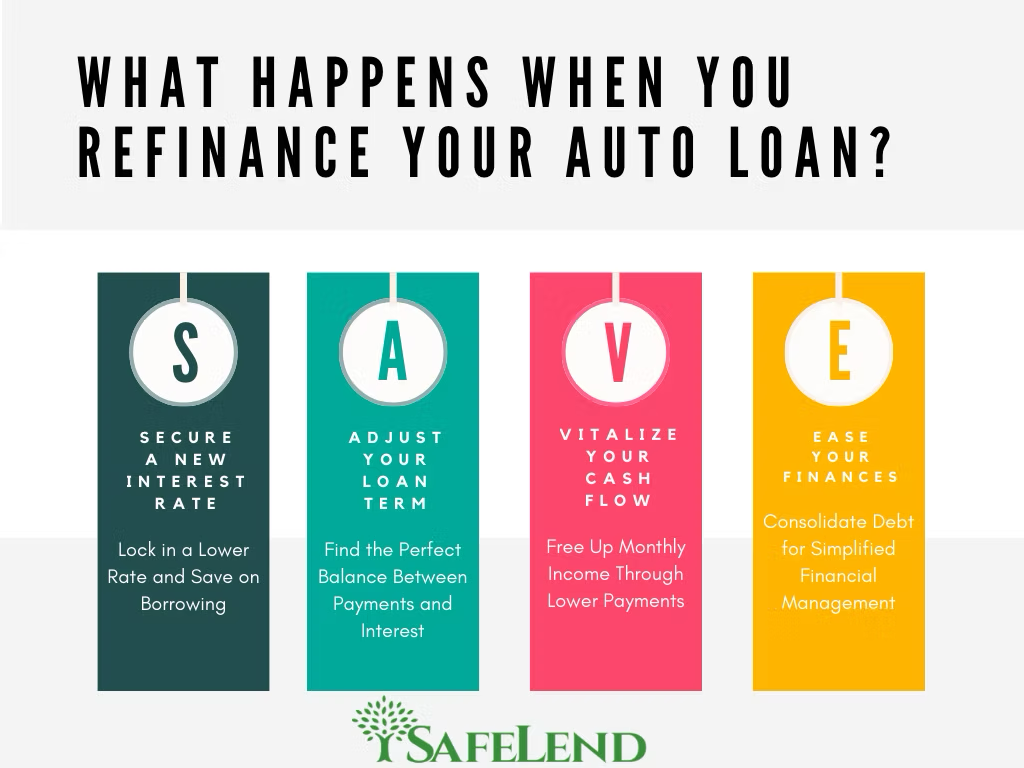
Auto loan refinance in Canada means replacing your existing car loan with a new loan that pays off the remaining balance and creates a new repayment agreement. The new loan may offer lower interest rates, improved loan terms, or more flexible monthly payments depending on your financial situation.
Borrowers often refinance to secure a lower interest rate, reduce monthly car payments, or adjust the length of their loan term. In some cases, refinancing may also allow borrowers to move away from lenders with unfavourable terms or limited flexibility.
Think of refinancing as choosing a better financial route for the remainder of your loan. It allows you to restructure the remaining balance into a more manageable payment plan.
How Does Auto Loan Refinancing Work?
When you refinance a car loan, a new lender issues a loan that pays off the remaining balance of your existing vehicle loan. Once the original loan is cleared, you begin making payments under the new loan terms.
The refinancing process typically includes:
- Submitting a new loan application
- Completing a credit review or credit inquiry
- Verifying income and vehicle information
- Receiving approval with updated loan terms
After approval, the new lender pays off your existing loan and you begin making payments according to the new repayment schedule.
Why Do Canadians Choose Auto Loan Refinance?
Many Canadians refinance their car loan to improve their financial situation. Common reasons include:
Lower interest rates
If interest rates have decreased or your credit score has improved, refinancing may reduce the interest charged on your loan.
Lower monthly payments
Securing a better interest rate or extending the loan term can help reduce monthly payment obligations.
Improved loan flexibility
Some lenders offer flexible repayment options, including the ability to make extra payments without penalties.
Better loan terms
Refinancing may allow borrowers to move away from high interest loans or lenders with restrictive terms.
When Should You Consider Refinancing a Car Loan?
Auto loan refinancing may be worth considering if:
- Interest rates have dropped since your original loan
- Your credit score has improved through consistent on time payments
- Your financial situation has changed
- Your current loan payments no longer fit your budget
- You want to adjust your loan term or repayment structure
Before refinancing, review your existing loan agreement and consider potential costs such as early repayment penalties or lender fees.
When done strategically, auto loan refinance can improve cash flow, reduce financial stress, and make vehicle loan payments more manageable.
What Is the Current Landscape of Auto Loan Refinance in Canada?
Auto loan refinance in Canada has become an increasingly common financial strategy for borrowers looking to improve their vehicle loan terms. With rising living costs and changing interest rates, many Canadians are exploring refinancing options to lower monthly payments or adjust their loan terms to better match their financial situation.
Refinancing allows Canadians to replace their current car loan with one that may reduce interest rates or improve repayment terms.
For borrowers carrying high interest auto loans or struggling with monthly payments, refinancing can provide an opportunity to regain financial control and improve long term affordability.
How Interest Rates Affect Auto Loan Refinancing
Interest rates play a major role in determining whether refinancing a car loan makes financial sense.
When interest rates decline or a borrower’s credit profile improves, refinancing may provide access to more competitive loan terms. Even a small reduction in interest rates can lead to meaningful savings over the life of the loan.
Many borrowers use tools such as an auto refinance calculator to estimate potential savings before submitting a refinancing application.
Eligibility Requirements for Auto Loan Refinance
Lenders evaluate several factors when reviewing an auto loan refinance application.
Common factors include:
- Credit score and credit history
- Income stability and employment status
- Remaining balance on the current vehicle loan
- The market value and condition of the vehicle
- Overall debt levels and financial obligations
Borrowers with strong credit profiles may qualify for more competitive rates, although many lenders also offer refinancing options for those working to rebuild their credit.
Understanding the Refinancing Process
Auto loan refinancing typically involves applying for a new loan that pays off the remaining balance of your existing vehicle loan.
The process usually includes:
- Completing a refinance loan application
- Allowing the lender to review your credit profile and financial details
- Receiving loan approval and updated loan terms
- The new lender paying off your existing vehicle loan
- Beginning payments under the new loan agreement
Depending on the lender, the process can often be completed online through a streamlined digital application.
Potential Costs to Consider Before Refinancing
While refinancing can offer savings, borrowers should still consider potential costs when replacing their current loan.
These may include:
- Early repayment penalties from the original loan
- Loan origination or application fees
- Credit inquiries during the approval process
Reviewing these costs helps ensure refinancing produces real financial savings rather than simply shifting expenses.
The Long Term Impact of Auto Loan Refinance
When done strategically, auto loan refinancing can improve overall financial stability.
Benefits may include:
- Lower monthly vehicle payments
- Reduced total interest paid over time
- Improved cash flow and budgeting flexibility
- A stronger credit profile through consistent on time payments
For many Canadians, refinancing a vehicle loan is not just about switching lenders. It allows borrowers to restructure their loan so it better aligns with their income, budget, and long term financial goals.
How Does Refinancing Affect Your Existing Car Loan?
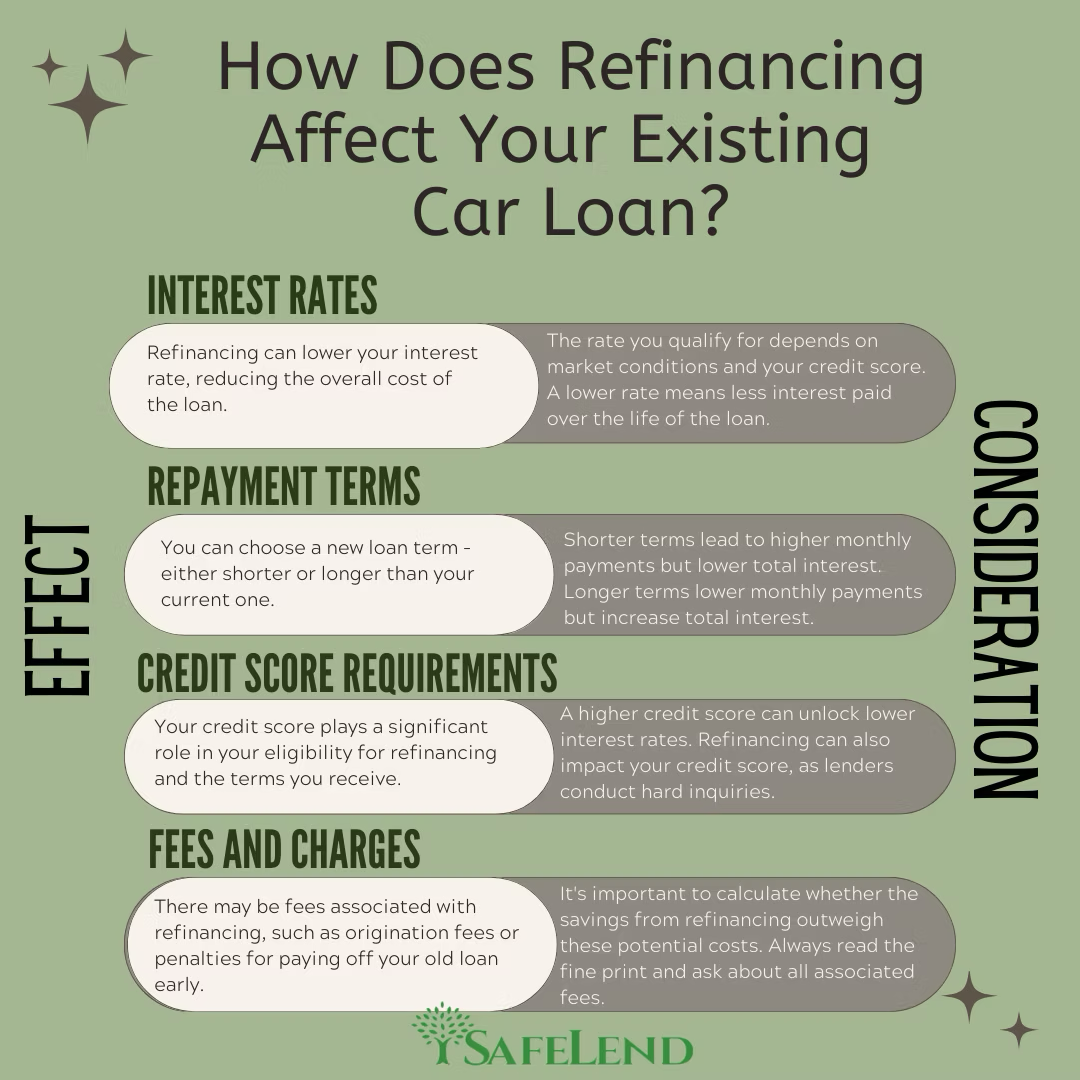
When you complete an auto loan refinance in Canada, your existing vehicle loan is replaced with a new loan from another lender or financial institution. The new loan pays off the remaining balance of your current loan, and you then begin making payments under the terms of the new loan agreement.
Refinancing does not create a second loan. It replaces your current car loan with a new one that may offer better repayment terms or lower interest rates.
Understanding how refinancing affects your loan can help determine whether it makes financial sense.
What Happens to Your Existing Vehicle Loan?
Once your refinancing application is approved, the new lender will typically pay off the remaining balance of your existing auto loan directly to your original lender.
After the previous loan is fully paid:
- Your original loan account is closed
- Your remaining balance is transferred to the new loan
- Your repayment schedule begins under the new loan terms
From that point forward, you will make your monthly car payments to the new lender instead of your original financial institution.
How Refinancing Can Change Your Monthly Payments
One of the most common reasons borrowers pursue an auto loan refinance is to lower their monthly car payments.
Your payment amount may change based on several factors, including:
- A lower interest rate
- A different loan term length
- A change in lender fees or loan structure
For example, refinancing into a loan with a lower interest rate or extending the repayment period can help reduce your monthly payment obligations. However, extending the loan term may increase the total interest paid over time.
How Auto Loan Refinance Can Affect Your Interest Costs
Refinancing may also reduce the total interest you pay on your vehicle loan.
If your credit score has improved since you originally financed your vehicle, or if interest rates have declined, you may qualify for more competitive loan rates through auto loan refinance. Lenders often reward stronger credit standing with better loan terms. Even a small reduction in interest rates can significantly lower interest charges and create noticeable savings over the life of your loan.
Many borrowers use refinancing calculators to compare their current loan costs against potential refinance offers before making a final decision.
How Refinancing May Affect Your Credit Profile
Applying for an auto loan refinance may temporarily affect your credit score because lenders typically perform a credit inquiry during the application process.
However, the impact is usually small and temporary. Over time, refinancing may actually support your credit health if it helps you maintain consistent on time payments and manage your debt more effectively.
Consistent payment history remains one of the most important factors influencing long term credit improvement.
What Happens to Your Car Loan When You Refinance
Auto loan refinance replaces your existing car loan with a new loan that may offer better repayment terms, lower interest rates, or more manageable monthly payments. When approached strategically, refinancing can improve cash flow, reduce financial stress, and help borrowers better align their vehicle loan with their current budget, income stability, and long term financial goals.
How Can You Maximize the Benefits of Auto Loan Refinancing?
Maximizing the benefits of an auto loan refinance in Canada begins with preparation and a clear understanding of your financial goals. By reviewing your current loan, comparing lender offers, and understanding how refinancing works, you can make a decision that improves your financial flexibility and long term affordability.
Taking the time to prepare before applying can significantly increase the chances of securing better loan terms and meaningful savings.
Preparing for the Auto Loan Refinance Process
Maximizing the benefits of an auto loan refinance begins with preparation and a clear understanding of your financial situation. Reviewing your current loan details, comparing lender offers, and gathering key documents can help you secure better loan terms and improve overall affordability.
Review Your Current Vehicle Loan
Start by reviewing the details of your existing auto loan, including:
- Your current interest rate
- Remaining loan balance
- Remaining loan term
- Any early repayment penalties
Understanding these details helps determine whether refinancing will produce real financial savings.
Check Your Credit Score
Your credit score plays an important role in determining the interest rates and loan terms available to you. Reviewing your credit profile before applying can help you understand what refinancing options you may qualify for.
If your credit score has improved since your original loan, refinancing may allow you to access more competitive rates.
Gather the Required Documents
Most lenders require basic financial documentation during the refinancing process.
Common documents may include:
- Proof of income
- Vehicle information such as make, model, and mileage
- Current loan account details
- Personal identification
Having these documents ready can help streamline the approval process.
Compare Lenders and Loan Offers
Refinance offers can vary significantly between lenders. Comparing interest rates, loan terms, and lender policies can help you choose the option that best supports your financial goals.
Borrowers should also review lender fees, repayment flexibility, and customer support options.
Review the Loan Terms Carefully
Before finalizing a refinancing agreement, review the loan terms carefully. Pay attention to potential fees, repayment penalties, and restrictions that could affect your loan over time.
Understanding the full loan structure helps prevent unexpected costs later.
Why Borrowers Choose Auto Loan Refinance
Borrowers pursue auto loan refinancing for a variety of financial reasons. Understanding these motivations can help you determine whether refinancing is the right strategy for your situation.
Lower Interest Rates
If interest rates have dropped or your credit score has improved since your original loan, refinancing may allow you to secure a lower interest rate. Even a modest rate reduction can create noticeable savings across the life of the loan.
Improved Monthly Affordability
Refinancing may help lower your monthly car payment by securing a better interest rate or adjusting the length of the loan term. This can create more flexibility within your monthly budget.
Access to Better Loan Features
Some lenders offer refinancing loans with additional benefits, such as flexible payment schedules or the ability to make extra payments without penalties.
Adapting to Financial Changes
If your financial situation has changed since you originally financed your vehicle, refinancing can help adjust your loan terms to better match your current income and financial responsibilities.
Debt Management Strategies
In some cases, refinancing may also support broader financial strategies by helping borrowers better manage debt and simplify their financial obligations.
How to Get the Most Value From Auto Loan Refinancing
A successful auto loan refinance requires preparation, research, and a careful evaluation of your current vehicle loan terms. By understanding your financial situation, reviewing your credit standing, and comparing offers from multiple lenders, you can make a more informed decision. Taking these steps helps maximize potential savings while improving the financial flexibility and affordability of your monthly car payments.
What Other Strategies Can Help Reduce Car Loan Costs?
While an auto loan refinance can often provide the biggest financial relief, it is not the only way to reduce the cost of owning and financing a vehicle. Several additional strategies can help borrowers lower their car loan expenses and improve overall financial stability.
Combining these approaches with refinancing may create even greater long term savings.

Make Extra Payments Toward Your Loan Principal
If your loan agreement allows it, making extra payments toward the principal balance of your car loan can help reduce the total interest paid over time.
Even small additional payments can make a difference by lowering the remaining balance faster. Over the life of the loan, this can shorten the repayment period and decrease the overall cost of borrowing.
Before making additional payments, check whether your lender charges prepayment penalties or places restrictions on early repayment.
Improve Your Credit Profile
Your credit score plays a major role in the interest rates lenders offer. Strengthening your credit profile can increase your chances of qualifying for better loan terms if you decide to refinance in the future.
Ways to improve your credit profile may include:
- Making all payments on time
- Reducing outstanding debt balances
- Avoiding unnecessary credit inquiries
- Reviewing your credit report for errors
As your credit improves, you may gain access to more competitive refinancing opportunities and lower interest rates.
Review Your Vehicle Insurance Coverage
Vehicle insurance is often one of the largest ongoing costs associated with car ownership. Reviewing your insurance policy periodically can help ensure you are not paying more than necessary.
Shopping around for insurance providers or adjusting coverage levels may reduce monthly expenses and free up room in your overall budget.
Avoid Extending Loan Terms Unnecessarily
While extending a loan term can reduce monthly payments, it may increase the total interest paid over the life of the loan. Borrowers should carefully evaluate whether lower monthly payments are worth the potential long term cost.
In many cases, balancing an affordable monthly payment with a reasonable loan term provides the best financial outcome.
Monitor the Value of Your Vehicle
Understanding your vehicle’s current market value can help you make informed financial decisions, especially if you are considering refinancing or trading in your vehicle.
Tracking vehicle value may also help borrowers avoid situations involving negative equity, where the remaining loan balance exceeds the value of the vehicle.
Ways to Strengthen Your Financial Position Beyond Auto Loan Refinance
Auto loan refinance can be one of the most effective ways to reduce car loan costs, but combining refinancing with smart financial habits can strengthen your overall financial position. Managing debt carefully, improving credit health, and reviewing ongoing vehicle expenses can all contribute to better long term financial outcomes.
Struggling with Car Payments? What Strategies Can You Try?
If your monthly car payments feel difficult to manage, you are not alone. Rising living costs and unexpected financial changes can make vehicle loan payments challenging for many borrowers.
If your current auto loan no longer fits comfortably within your budget, several strategies may help reduce financial pressure while protecting your credit profile.
Increase Your Income With a Second Job
If your current income makes vehicle loan payments difficult, adding a second job or additional income source can help increase cash flow.
Additional income may allow you to:
- Stay current on car loan payments
- Avoid missed payments that could harm your credit score
- Apply extra funds toward reducing your loan balance
Before committing to additional work, consider your schedule and long term sustainability to avoid burnout.
Consider Downsizing Your Vehicle
If your current vehicle loan carries a large balance or high monthly payment, trading your vehicle for a more affordable option may help improve your financial situation.
Downsizing your vehicle may reduce:
- Your remaining loan balance
- Monthly car payments
- Insurance costs
- Long term maintenance expenses
Before making this decision, compare the trade in value of your vehicle with the terms of a new loan to ensure the change improves your finances.
Reduce Non Essential Spending
Another strategy is reviewing your monthly spending and identifying areas where expenses can be reduced.
Common areas to review include:
- Subscription services
- Dining out or takeout
- Entertainment expenses
- Impulse purchases
Redirecting even small amounts toward your vehicle loan can help reduce financial pressure and support a consistent payment history.
What to Do If Your Car Payments Become Difficult to Manage
If your car payments are becoming difficult to manage, proactive steps can help prevent financial stress from escalating. Increasing income, reducing expenses, or adjusting your vehicle costs may help restore balance to your budget.
If your current loan terms are the main source of financial strain, an auto loan refinance may still be one of the most effective ways to lower payments and regain financial breathing room.

Have Questions About Auto Loan Refinance? SafeLend Canada Is Here to Help
Navigating the auto loan refinance process can feel overwhelming, especially when dealing with rising car payments or changes in your financial situation. Understanding your options is an important step toward making confident financial decisions.
At SafeLend Canada, the goal is to help Canadians better understand their vehicle financing options and explore refinancing opportunities that may improve affordability.
Expert Guidance Without Pressure
Refinancing a car loan is an important financial decision. SafeLend Canada provides clear information to help borrowers understand how auto loan refinancing works and whether it may fit their financial situation.
Whether you are exploring lower interest rates, reducing monthly payments, or comparing lender options, advisors can help explain the refinancing process and available loan structures.
Advice Based on Your Financial Situation
Every borrower’s financial situation is different. Some Canadians apply with strong credit profiles, while others may be rebuilding credit after financial setbacks.
SafeLend Canada works with borrowers across many financial situations, including those dealing with:
- Higher interest auto loans
- Negative equity on a vehicle
- Changing income circumstances
- Improving credit scores
By reviewing current loan details and financial goals, borrowers can explore refinancing options that better match their situation.
Simple and Flexible Application Options
Exploring an auto loan refinance does not have to be complicated. SafeLend Canada offers secure online applications and access to knowledgeable advisors who can help answer questions about the refinancing process.
With the right information and guidance, refinancing can become a practical step toward better financial control.
More Than a Loan Review
At SafeLend Canada, we believe refinancing is not just about replacing one loan with another. It is about helping borrowers find financial solutions that support their long term goals.
If you are considering auto loan refinancing or simply want to understand your options, our team is ready to help you take the next step with clarity and confidence.
Final Thoughts: Navigating Financial Flexibility With Auto Loan Refinance
Auto loan refinance in Canada can be a valuable financial tool for borrowers looking to improve their vehicle loan terms and gain better control over their monthly finances. Whether your goal is to lower your interest rate, reduce monthly payments, or adjust your loan structure, refinancing provides an opportunity to restructure your existing car loan.

Throughout this guide, we explored how auto loan refinancing works, why many Canadians choose to refinance, and how the process can help align your vehicle loan with your current financial goals. Evaluating your current loan, comparing lenders, and improving your credit profile can all contribute to better refinancing outcomes.
When used strategically, an auto loan refinance may improve cash flow, reduce financial stress, and provide greater control over your monthly budget. Even small changes in interest rates or loan terms can create noticeable savings over the life of the loan.
Tools such as refinance calculators, online applications, and guidance from experienced advisors can help borrowers better understand their refinancing options.
Whether you have strong credit or are rebuilding your credit history, exploring auto loan refinance can be a proactive step toward improving financial stability and managing your vehicle financing more effectively.
Frequently Asked Questions About Auto Loan Refinance
What is auto loan refinance?
Auto loan refinance means replacing your current car loan with a new loan that pays off your existing balance. After refinancing, you begin making payments under the new agreement. Many borrowers choose to refinance your auto loan to lower interest charges, adjust the loan amount, or improve their overall loan terms.
When should I consider auto loan refinance?
You may want to refinance your auto loan if your credit standing has improved, interest rates have dropped, or your monthly payments no longer fit your budget. Borrowers often refinance after strengthening their credit profile or when they want to restructure their loan amount to improve affordability.
Does auto loan refinance affect your credit score?
Applying to refinance your auto loan usually requires a credit inquiry as part of the loan application review. This may temporarily impact your credit score slightly. However, refinancing can improve your credit standing over time if the new loan helps you maintain consistent on time payments.
Are there fees associated with refinancing a car loan?
Some lenders may charge fees during the refinancing process, including administrative charges or early repayment penalties from your original loan. Borrowers should compare interest charges and total loan costs carefully to ensure the refinance provides real financial savings.
How can I find the best auto loan refinance offer?
To find the best refinance option, compare multiple lenders and review their loan terms carefully. Look at interest charges, repayment flexibility, and approval requirements. Many borrowers start with an online application to quickly explore available offers and estimate their potential monthly savings.
Can I refinance a car loan if I owe more than the car is worth?
If your remaining loan amount is higher than the vehicle’s market value, you may have negative equity. Some lenders still offer refinancing options depending on your credit approval, income stability, and overall financial profile. Each lender may evaluate this situation differently.
How long does auto loan refinancing take?
The refinance process can take anywhere from a few days to several weeks depending on the lender and the complexity of your loan application. SafeLend Canada, the only online platform in Canada dedicated to auto loan refinancing, offers a streamlined online application that can deliver faster decisions. In some cases, refinancing may even be completed the same day if all required documents are ready.
Can refinancing help if I am struggling with car payments?
Yes. When you refinance your auto loan, you may be able to lower your monthly payments by reducing interest charges or adjusting the loan term. This can help borrowers better manage their loan amount and avoid financial strain.
Can refinancing help when purchasing a new vehicle?
Refinancing is typically used for existing vehicle loans. However, some borrowers refinance after purchasing a new vehicle if they later qualify for better loan terms, such as improved credit standing or stronger financial stability.
Does SafeLend Canada offer auto loan refinancing?
SafeLend Canada helps Canadians explore options to refinance your auto loan by connecting borrowers with lending partners. Through a simple loan application or online application, borrowers can review offers designed to lower interest charges and improve loan affordability.
Important Note: This article and its resources are purely for informational use. They do not reflect the offerings of specific companies or lenders. Our goal is to provide knowledge and insights for better financial decision-making. We recommend conducting in-depth research and seeking professional advice before making any financial decisions. SafeLend Canada, while not a lender, collaborates with various lenders to assist clients in refinancing their auto loans.