


Last Updated: April 2026 (Updated to reflect current Canadian auto refinancing trends and lender requirements.)
Published: September 2023
By: Danielle Burton
Category: Negative Equity
If you are wondering how to get out of negative equity on a car in Canada, you are not alone. Many drivers find themselves owing more on their auto loan than their car is worth, especially with long-term loans, high interest rates, or little to no down payment at the time of purchase.
Negative equity on a car—when you owe more on the loan than the car's current value
Negative equity, often called an upside-down loan, happens when your remaining loan balance is higher than your vehicle’s market value. This usually happens because of rapid depreciation, when the value of the car drops faster than the loan is paid down. As a result, it can become harder to sell, trade in, or refinance without taking on additional debt.
The good news is that there are practical ways to regain control. Whether you want to lower your payments, reduce interest costs, or restructure your car finance, options like auto refinancing, strategic repayment, or selling your vehicle can help you move toward a stronger financial position.
In this guide, you will learn how negative equity happens, what causes it, and the most effective ways Canadian borrowers can reduce or eliminate it.
In This Guide:
- 1. What Is Negative Equity on a Car Loan?
- 2. What Causes Negative Equity on a Car Loan?
- 3. How to Get Out of Negative Equity on a Car in Canada
- 4. How to Maintain Positive Equity on Your Car Loan
- 5. Can You Refinance a Car With Negative Equity in Canada?
- 6. What Mistakes Should You Avoid When Dealing With Negative Equity on a Car?
- 7. How to Compare the Best Auto Loan Refinancing Options in Canada
- 8. How SafeLend Canada Can Help You Move Forward
- 9. Final Thoughts on Overcoming Negative Equity on a Car
- 10. Frequently Asked Questions About Negative Equity and Auto Refinance
What Is Negative Equity on a Car Loan?
Negative equity on a car loan means you owe more on your vehicle than it is currently worth. This is often referred to as an upside-down loan, where the remaining balance on your auto loan exceeds the vehicle’s market value.
Negative Equity = Loan Balance − Vehicle Value

For example, if your remaining loan balance is $25,000 but your car value or resale value is only $20,000, you have $5,000 in negative equity.
This negative equity situation is common in Canada, particularly for borrowers with extended loan terms, higher interest charges, or little to no down payment at the time of their auto purchase. Due to rapid depreciation, the price of the car can drop quickly, often faster than the loan balance is reduced through regular payments.
Negative equity can make it harder to:
- sell your vehicle without paying the difference out of pocket
- trade in your car without rolling over debt into a new financing contract
- explore lender options for auto refinancing depending on approval criteria
Understanding how negative equity works is the first step toward effective negative equity handling. For many borrowers, restructuring their car finance through auto refinancing can help reduce interest payments, improve loan terms, and move closer to positive equity over time.
What Causes Negative Equity on a Car Loan?
Negative equity on a car loan occurs when your loan balance does not decrease as quickly as your vehicle value. This negative equity situation is often the result of several factors working together within a typical car finance or financing contract.
Rapid Vehicle Depreciation
Vehicle depreciation begins as soon as you drive off the car lot. In the first few years, this rapid depreciation can significantly reduce the resale value and market value of the vehicle, often faster than the balance on your vehicle loan is paid down.
Long-Term Loans and Extended Loan Terms
Long-term loans, such as 72 or 84 months, are commonly used to make monthly payments more affordable. However, extended loan terms slow how quickly you build equity and increase the total interest paid over the loan’s term.
This can make it easier to become upside down on your auto loan for a longer period.
High Interest Rates and Interest Charges
Higher interest rates mean a larger portion of your payment goes toward interest charges instead of reducing the principal. This leads to more interest payments over time and slows your progress toward positive equity.
Low or No Down Payment
Starting a finance agreement with little or no down payment means you begin with minimal ownership in the vehicle. As the car value declines due to depreciation, it becomes easier to fall into a negative equity situation early in the loan.
Rolling Over Previous Debt
Rolling over existing debt from a previous auto loan into a new financing contract increases the total amount financed. This can create a snowball effect, where negative equity continues to carry forward into future vehicle loans.
Why Understanding the Cause Matters
Understanding what led to your negative equity helps you make more informed decisions. Whether you focus on reducing your balance faster, adjusting your approach to car finance, or exploring auto refinancing, identifying the root cause allows you to take a more strategic path toward long-term financial stability.
How to Get Out of Negative Equity on a Car in Canada

Getting out of negative equity on a car in Canada requires a strategic approach based on your financial situation, current auto loan, and long-term goals. There is no one-size-fits-all solution, but several proven strategies can help reduce the gap between your loan balance and your vehicle’s market value.
1. Make Extra Payments Toward Your Loan
One of the most effective ways to improve a negative equity situation is to reduce your loan balance faster. Making additional payments directly toward the principal lowers the interest paid over the loan’s term and helps offset the impact of vehicle depreciation.
Even small extra contributions can reduce interest charges and accelerate your progress toward positive equity.
2. Consider Auto Refinancing
Auto refinancing allows you to restructure your current vehicle loan to better align with your financial situation. Depending on your profile and available lender options, this may help you secure a lower interest rate, reduce interest payments, or adjust your loan term.
Refinancing can also improve your overall car finance structure by making payments more manageable. While it may not eliminate negative equity immediately, it can create a more sustainable path forward.
3. Pay the Difference When Selling or Trading In
If you plan to sell your vehicle or trade it in through a dealership or car dealers, you can choose to pay the difference between your loan balance and the vehicle’s trade-in value out of pocket.
This clears the remaining balance on your finance agreement and prevents negative equity from carrying into your next auto purchase. While this option requires upfront funds, it can help protect your long-term financial position.
4. Avoid Rolling Over Negative Equity Into a New Loan
Rolling over negative equity into a new financing contract may seem like a quick fix, but it often increases your total debt and extends repayment over a longer period.
This can create a snowball effect, where negative equity continues to grow with each new auto loan. Understanding the long-term impact is essential before moving forward.
5. Keep Your Vehicle Longer
Keeping your current vehicle and continuing regular payments allows time for your loan balance to catch up to the vehicle value. As depreciation slows and your balance decreases, the gap between what you owe and the resale value gradually shrinks.
How to Maintain Positive Equity on Your Car Loan
Once you have worked through a negative equity situation, the next step is maintaining positive equity over time. This means ensuring your vehicle’s value stays higher than your remaining loan balance as your auto loan progresses.
Think of your car as a depreciating asset that requires active management. While each payment reduces your loan balance, your vehicle is also losing value, so the goal is to stay ahead of that depreciation.
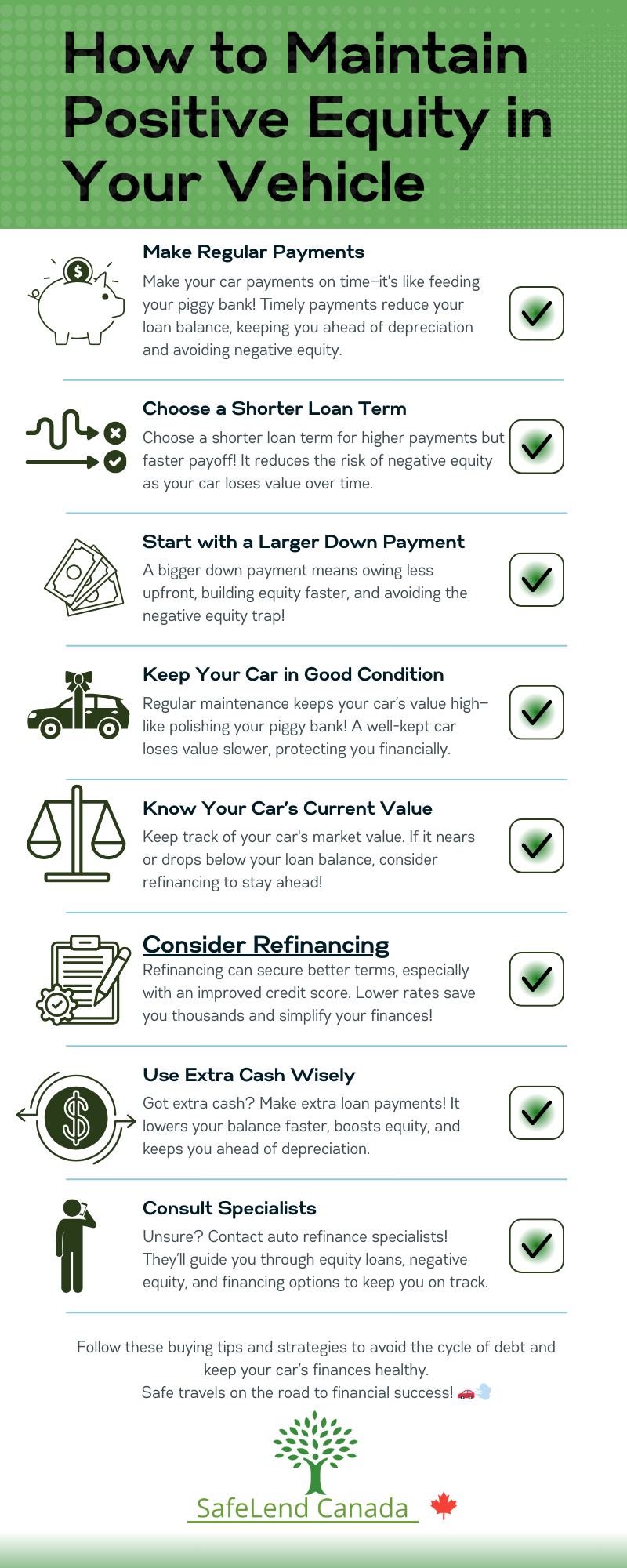
Maintaining positive equity is about staying proactive. With the right approach, you can protect your financial progress and avoid returning to a negative equity situation.
Can You Refinance a Car With Negative Equity in Canada?
Yes, you can refinance a car with negative equity in Canada, but approval depends on several factors including your credit profile, income, and the relationship between your vehicle value and remaining auto loan balance.
Lenders carefully assess risk during the application process, so while auto refinancing is possible in a negative equity situation, it is not guaranteed for every borrower.
When Refinancing With Negative Equity Is Possible
You may be able to refinance your vehicle loan if:
- your credit score has improved since your original financing contract
- you have stable income and manageable debt levels
- your vehicle still holds sufficient market value relative to the loan balance
- the amount of negative equity falls within acceptable lender limits
In these cases, auto refinancing can help restructure your car finance into more manageable terms, potentially lowering your interest rate and reducing overall interest payments. Understanding lender options and how the application process works can also improve your chances of approval.
When Refinancing May Be More Challenging
Refinancing an upside-down loan may be more difficult if:
- the gap between your loan balance and vehicle value is too large
- your credit profile falls into a higher-risk category
- your income or debt-to-income ratio does not meet lender requirements
- your vehicle has high mileage, lower resale value, or falls outside typical lender guidelines
In these situations, lenders may decline the application or offer less favourable terms with higher interest charges.
How Refinancing Can Still Help
Even if negative equity is not eliminated immediately, auto refinancing can still be a valuable tool for improving your financial position. It may allow you to:
- lower your interest rate
- reduce your monthly payments
- adjust your loan term to better fit your budget
- reduce the total interest paid over the loan’s term
- create a more structured path toward positive equity
For many borrowers, working with a platform like SafeLend Canada can simplify the process by helping compare multiple lender options and identify solutions that better align with their financial situation.
What Mistakes Should You Avoid When Dealing With Negative Equity on a Car? (and the Risks to Watch For)
When dealing with a negative equity situation on a car loan, avoiding the wrong decisions is just as important as choosing the right strategy. Certain actions can increase your total debt, extend your financing contract, or delay your ability to reach positive equity over time.
Here are the most common mistakes to avoid, along with the risks that come with them.
1. Rolling Negative Equity Into a New Loan Without a Plan
Rolling over existing debt into a new auto loan may seem like a quick fix, especially during a new auto purchase at a dealership or car lot. However, this often increases the total amount financed and keeps you in a cycle of negative equity.
The risk: you may end up owing more than the vehicle value on a car that continues to decline due to depreciation.
Without a clear negative equity handling strategy, this can create a snowball effect that carries debt into future vehicle loans.
2. Focusing Only on Lower Monthly Payments
Lower monthly payments can improve short-term affordability, but they are often achieved through extended loan terms. This can significantly increase the interest paid over the loan’s term and raise your overall borrowing cost.
The risk: you remain in long-term loans longer and slow your progress toward building equity.
Instead, look at both your monthly payment and the total interest charges tied to your car finance agreement.
3. Accepting the First Offer Without Comparing Options
Not all lender options are the same. Accepting dealership financing or the first offer presented by car dealers may limit your ability to secure better terms.
The risk: you could end up with higher interest rates or a less flexible financing contract than necessary.
Taking time to compare offers can improve your overall loan structure and reduce long-term costs.
4. Ignoring Your Credit Profile
Your credit profile plays a key role in determining approval, interest rates, and available lender options. Ignoring it can limit your ability to access more competitive financing solutions.
The risk: higher interest payments, increased interest charges, or fewer refinancing opportunities.
Even small improvements to your credit can expand your available options.
5. Waiting Too Long to Take Action
Delaying action allows interest to accumulate and can reduce your available solutions over time. As vehicle depreciation continues and resale value declines, the gap between your loan balance and what the vehicle is worth can become more difficult to manage.
The risk: fewer options, higher costs, and increased financial pressure.
Taking early steps, even small ones, can help stabilize your situation and improve your flexibility moving forward.

How to Compare the Best Auto Loan Refinancing Options in Canada
Finding the right auto refinancing option can make a significant difference in how you manage your car loan, especially if you are working through negative equity.
Rather than focusing on a single lender, it is important to understand the different lender options available and how they compare.
Common Auto Loan Refinancing Options
When exploring refinancing, borrowers typically consider:
- Traditional banks: Often offer competitive rates for strong credit profiles but may have stricter approval criteria.
- Dealership financing: Convenient when purchasing through car dealers, but may not always provide the most flexible loan terms.
- Specialized lending platforms: Services like SafeLend Canada connect borrowers with multiple lenders, helping match different financial situations with appropriate loan solutions.

*Please note: SafeLend Canada Ltd. is an affiliate of the lender
What to Look for When Comparing Offers
When reviewing refinancing options, focus on:
- interest rate and total interest paid over the loan’s term
- monthly car payments and affordability
- loan term length and flexibility
- approval requirements and application process
- overall fit with your financial goals
How SafeLend Canada Fits In

SafeLend Canada provides access to a network of lending partners, helping borrowers compare multiple offers in one place. This can be especially useful for those navigating a negative equity situation or looking for more flexible approval options.
Their streamlined online application process allows you to explore potential solutions quickly, often with fast decision times. By working with a range of lenders, they offer more flexibility in loan structures and terms.
Making the Right Choice
While platforms like SafeLend Canada can simplify the process, it is important to compare all available options. The best refinancing solution is one that supports your long-term financial goals, not just immediate payment relief.
How SafeLend Canada Can Help You Move Forward
Overcoming a negative equity situation on a car loan can feel challenging, but having access to the right tools and guidance can make the process more manageable. With a clear understanding of your loan and available options, you can take steps toward improving your financial position and regaining control of your car finance.
SafeLend Canada helps simplify this process by allowing you to explore auto refinancing solutions tailored to your financial profile. Instead of approaching individual lenders or relying solely on dealership financing, you can review multiple lender options in one place and better understand what may be available to you.
Depending on your eligibility, auto refinancing through SafeLend Canada may help you:
- reduce your interest rate and overall interest charges
- lower your monthly car payments
- adjust your loan term to better align with your budget
- reduce the total interest paid over the loan’s term
- create a more structured path toward positive equity
The application process is fully online and designed to be straightforward, making it easier to explore your options without unnecessary delays or complexity. By connecting borrowers with a range of lenders across prime, near-prime, and non-prime categories, SafeLend Canada helps increase your chances of finding a solution that fits your situation.
Final Thoughts on Overcoming Negative Equity on a Car

Negative equity on a car loan is a common challenge for many Canadian drivers, but it is not permanent. With the right approach, you can take control of your auto loan and move toward a stronger financial position.
The key is understanding how your loan balance compares to your vehicle’s market value, and making decisions that support your long-term goals, not just short-term relief. This includes evaluating your car payments carefully and ensuring your finance agreement aligns with your current financial situation.
Key Takeaways
- Negative equity occurs when your auto loan balance is higher than your vehicle’s market value or resale value
- Factors like vehicle depreciation, extended loan terms, and high interest charges can contribute to a negative equity situation
- Strategies such as making extra payments or using auto refinancing can help reduce the total interest paid over the loan’s term and improve your position over time
- Avoid rolling over debt into a new vehicle loan through car dealers without a clear plan for managing negative equity
- Taking action early can improve your lender options and support long-term financial stability
By staying informed and proactive, you can move away from an upside-down loan and toward a more manageable car finance structure that better supports your goals over time.
Frequently Asked Questions About Negative Equity and Auto Refinance
1. What is negative equity on a car loan?
Negative equity happens when your auto loan balance is higher than your vehicle’s market value. This is often called an upside-down loan and can make it harder to sell, trade in, or refinance your vehicle without taking on additional debt.
2. How do you get out of negative equity on a car in Canada?
You can get out of negative equity by making extra payments, refinancing your auto loan, paying the difference when selling or trading in, or keeping your vehicle long enough for the loan balance to catch up to its value. The best option depends on your financial situation and loan terms.
3. Can you refinance a car loan with negative equity?
Yes, it is possible to refinance a car loan with negative equity in Canada. Approval depends on factors such as your credit score, income, vehicle value, and the amount of negative equity. Some lenders may still offer options depending on your profile.
4. When should you refinance your car loan?
You should consider auto refinancing if your credit score has improved, interest rates have decreased, or your current car payments no longer fit your budget. Refinancing can also help reduce interest costs or adjust your loan term.
5. How do you maintain positive equity on a car loan?
To maintain positive equity, focus on shorter loan terms, avoid rolling over debt into new loans, make consistent payments, and limit frequent vehicle trade-ins. Monitoring your vehicle’s resale value can also help you make better financial decisions over time.
6. What should you look for when comparing auto loan refinancing options?
When comparing refinancing options, consider the interest rate, total interest paid over the loan’s term, monthly car payments, loan term length, approval requirements, and how well the loan fits your financial goals. Comparing multiple lender options can help you find the best fit.
7. Does refinancing a car loan affect your credit score?
Refinancing may cause a small, temporary dip in your credit score due to a credit inquiry. However, making consistent, on-time payments on your new loan can help improve your credit over time.
8. Do you keep your car when you refinance?
Yes, when you refinance your auto loan, you keep your current vehicle. Only the terms of your finance agreement change, such as your interest rate, loan length, or monthly payments.
9. How long does car loan refinancing take in Canada?
The refinancing process can vary depending on the lender and your application, but many online platforms offer quick decisions, sometimes within minutes, with full processing completed in a few days.
Important Note: This article and its resources are purely for informational use. They do not reflect the offerings of specific companies or lenders. Our goal is to provide knowledge and insights for better financial decision-making. We recommend conducting in-depth research and seeking professional advice before making any financial decisions. SafeLend Canada, while not a lender, collaborates with various lenders to assist clients in refinancing their auto loans.