


Last Updated: February 2026 (Updated to reflect current Canadian auto refinancing trends and lender requirements.)
Published: November 2023
By: Danielle Burton
Category: Negative Equity
Driving a vehicle off a Motor Vehicle Dealer's lot is exciting. But for many buyers, that excitement can quickly turn into negative equity in a car loan, a financial situation where your current auto loan balance exceeds the vehicle's market value. Even buyers with strong credit can end up in this situation if they do not fully understand how dealership financing, depreciation, and add-on products affect the total cost of the vehicle over time.
The motor vehicle industry is complex. Dealerships structure financing based on your credit report, annual income, payment history, and trade-in vehicle details. Monthly payments and interest rate offers may seem affordable, especially when promoted as competitive rates, but what truly matters is the total cost of the loan, how long it lasts, and whether optional add-ons are included. If your credit history reflects a bad credit score or damaged credit profile, you may be offered a subprime rate, which can accelerate the path toward negative equity in a car loan.
Many buyers concentrate mainly on the monthly payment without closely reviewing Vehicle Requirements, total finance charges, or the legal terms in their Product or Service agreements. Hidden fees, bundled add-ons, or rolled-in balances can quietly raise the total amount financed. If contracts are not carefully reviewed before submitting an online application or completing dealership financing, costs can increase more than expected.
In this guide, we outline how negative equity in a car loan happens, what causes it, and how to avoid common dealer financing errors. Whether you are dealing with current debt or preparing to buy your next vehicle, understanding how loan terms, interest rates, credit, and pricing work together can help protect your long-term financial goals.
In This Guide
- 1. What Is Negative Equity on a Car Loan and Why Does It Happen?
- 2. How Vehicle Depreciation Triggers Negative Equity on a Car Loan
- 3. Do Zero Down Payments and Extended Loan Terms Increase the Risk of Negative Equity?
- 4. How Dealer Pricing and Add-ons Create Negative Equity on a Car Loan
- 5. Is Rolling Old Debt Into a New Loan a Smart Strategy or a Fast Track to Negative Equity?
- 6. How High-Interest Dealer Financing Accelerates Negative Equity on a Car Loan
- 7. Can Auto Refinancing Fix Negative Equity on a Car Loan?
- 8. What Are the Most Common Causes of Negative Equity in Dealer Car Financing?
- 9. Conclusion
- 10. Frequently Asked Questions About Negative Equity on a Car Loan
What Is Negative Equity on a Car Loan and Why Does It Happen?
Negative equity in a car loan happens when you owe more on your current auto loan than the vehicle is worth. This situation is often described as being upside down on your car loan. It usually happens because vehicles lose value faster than the loan balance goes down, especially in the first few months when a larger part of each payment goes toward interest instead of principal.
Depreciation is the steady decline in a vehicle's value over time. As soon as you drive off a Motor Vehicle Dealer's lot, the resale value typically drops, sometimes by 10 percent or more. Unlike assets that increase in value, most vehicles continue to lose value each year, with the largest decrease usually happening during the first year of ownership.
Now layer financing on top of that depreciation.
If you finance the full purchase price, for example $20,000, through dealership financing or an auto finance company, you owe that amount plus interest. While lenders may advertise competitive rates, the annual interest rate you receive depends on your credit report, credit history, annual income, and overall risk profile. If your report reflects damaged credit or a bad credit score, you may be offered a subprime rate. Higher finance charges mean more of each payment goes toward interest rather than reducing principal, slowing equity growth.
If the vehicle's market value falls to $18,000 soon after purchase while your loan balance is still around $20,000, you are in negative equity in a car loan. Simply put, you owe more than the car is worth. The gap between your remaining loan balance and the vehicle's current value is called the equity shortfall.

Many buyers assume a new vehicle retains its purchase price for a considerable period of time. In reality, depreciation begins immediately. Longer loan terms, optional Add-on Products from the Add-on List, financed fees, and rolled-in balances can widen that gap further. Focusing only on monthly payment amounts during an online application without reviewing total finance charge, Vehicle Requirements, and long-term cost increases the risk.
To reduce the chance of negative equity in a car loan, it helps to:
- Make a meaningful cash down payment
- Choose a vehicle with a history of slower depreciation
- Avoid financing unnecessary Add-on Products
- Review dealership financing terms carefully during the application process
- Compare competitive rates before committing
- Consider total finance charge, not just the monthly rate
- Maintain strong payment history to support future refinancing options
Understanding how depreciation connects to your credit, interest rate, loan terms, and income is the first step to avoiding a financial situation that reduces your flexibility later.
How Vehicle Depreciation Triggers Negative Equity on a Car Loan
Vehicle depreciation is the main reason negative equity in a car loan happens. Most cars lose value more quickly than borrowers reduce their loan balance, especially in the first 12 to 24 months after purchase. Because that early drop in value is so steep, it can create an equity gap before you have had enough time to meaningfully lower the principal.
Most new vehicles lose roughly 15 to 25 percent of their value within the first year of ownership. Some models depreciate even faster depending on brand reputation, mileage, market demand, and overall condition. Because this decline happens so early, it can quickly create a gap between what the car is worth and the remaining balance on your loan.
At the same time, auto loans are structured so that early payments cover a larger portion of the finance charge rather than the principal balance. If you secured dealership financing at a higher annual interest rate, particularly with a subprime rate tied to a damaged credit profile or bad credit score, your principal decreases more slowly. That means depreciation is outpacing loan reduction.
Loan duration also plays a major role. Extended loan terms, such as 72 or 84 months, may lower monthly payment amounts, but they stretch repayment over a longer period of time. During the early years of a long-term loan, the outstanding balance often remains higher than the vehicle's market value. This increases the likelihood of negative equity in a car loan if you need to sell, refinance, or trade in the vehicle.
The equity gap becomes even more pronounced when:
- No down payment was made
- Taxes and registration fees were financed
- Optional Add-on Products were included in the loan
- Interest rates were above prime financing levels
Depreciation is unavoidable, but its financial impact can be managed with thoughtful planning. While every vehicle loses value over time, buyers can reduce the effect by choosing models that historically retain value better. Making a larger down payment and selecting loan terms that comfortably fit within your budget can help lower the risk of negative equity in a car loan over time.
Do Zero Down Payments and Extended Loan Terms Increase the Risk of Negative Equity in a Car Loan?
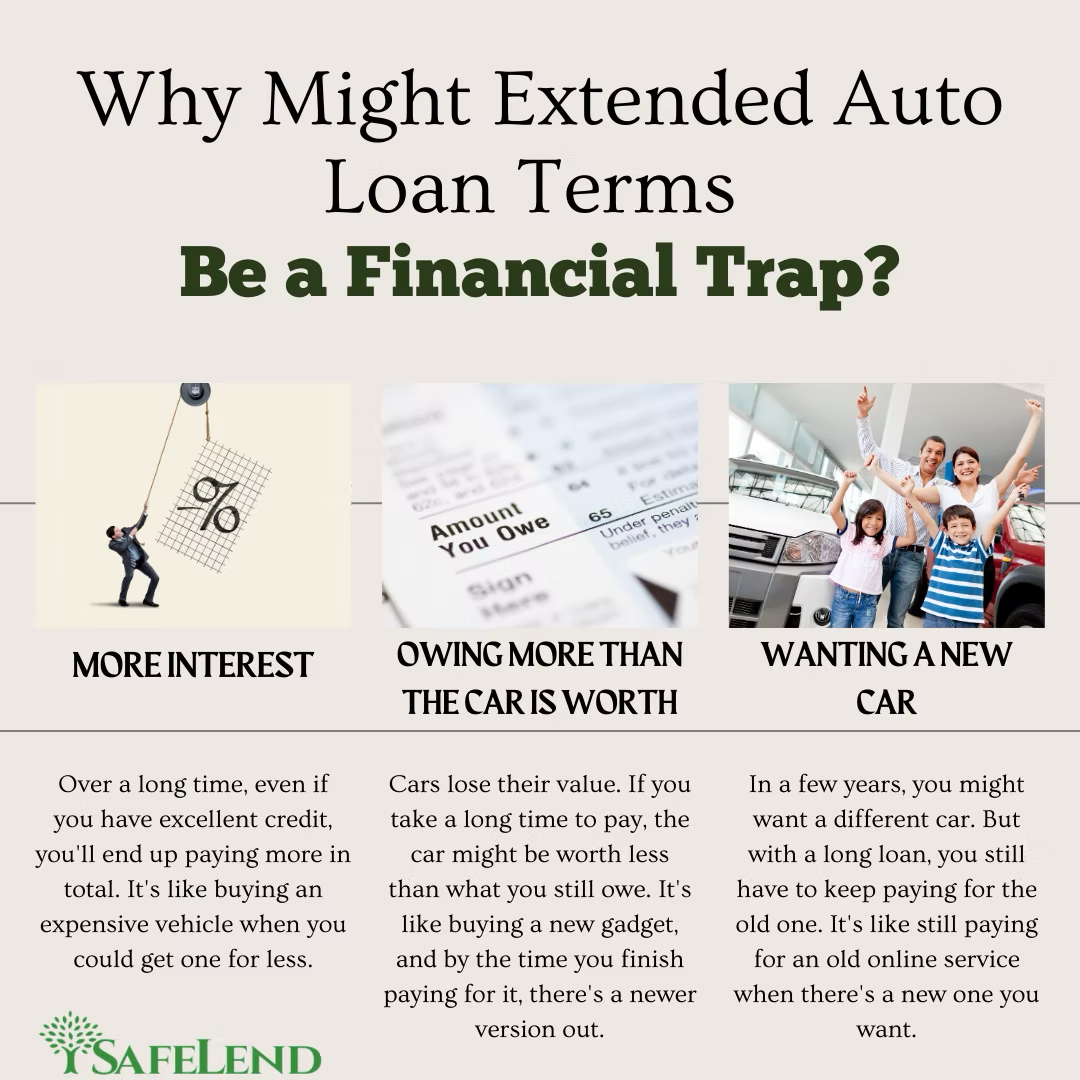
Yes, zero down payments and extended loan terms significantly increase the risk of negative equity in a car loan because they delay equity growth while depreciation begins immediately.
A zero down payment means you finance the entire purchase price through dealership financing or an auto finance company. Because you are not putting any money down upfront, your current auto loan begins at its highest possible balance. This larger starting amount increases total finance charges and leaves you with little to no equity cushion from the very first day of ownership.
Because vehicles depreciate quickly, especially in the first year, financing 100 percent of the purchase price creates an immediate imbalance. If you also have a damaged credit profile or bad credit score, you may be offered a subprime rate. Higher interest rates mean a greater portion of your monthly payment goes toward interest rather than reducing principal. This slows equity buildup even further.
Extended loan terms amplify this effect.
While longer repayment periods, such as 72 or 84 months, can lower monthly payment amounts, they stretch the loan over a greater period of time. During the early years of a long-term loan, the outstanding balance often declines very slowly. Meanwhile, the vehicle's market value continues to fall. The result is a widening gap that increases the likelihood of negative equity in a car loan.
Zero down payments and extended terms together create three primary risks:
- Higher total purchase price due to increased finance charges
- Slower principal reduction
- Greater exposure to depreciation in the early years
Buyers often prioritize quick approval or the lowest possible monthly payment during the online application process. However, lasting financial stability depends on understanding the entire loan structure. This includes reviewing the interest rate, loan term, total cost of borrowing, and any optional add-ons in the contract before signing and committing to the agreement.
Putting money down, choosing loan terms you can comfortably afford, and reviewing dealership financing carefully can greatly reduce the risk of negative equity in a car loan.
How Dealer Pricing and Add-ons Create Negative Equity in a Car Loan
Dealer pricing structure and optional add-ons can significantly increase the risk of negative equity in a car loan because they raise the total amount financed without increasing long-term vehicle value.
When buying from a Motor Vehicle Dealer, many shoppers begin with a base model and an advertised price. However, the final contract frequently includes additional costs such as extended warranties, protection plans, upgraded features, wheel packages, rust protection, documentation fees, and other optional add-ons. These extras are often added to dealership financing, increasing the total amount borrowed.
The problem is not just the higher price, it is how that price interacts with depreciation.
Vehicles lose value quickly on their own, and most add-ons tend to depreciate even faster.
Although you may finance thousands of dollars in optional features, buyers in the resale market usually do not place the same value on those upgrades. As a result, your loan balance reflects the full cost of the extras, but the vehicle's market value often does not.
This creates an equity imbalance.
When add-ons are included in the loan:
- The purchase price increases
- The total finance charge increases
- The principal balance starts higher
- It takes longer to build positive equity
If you also roll taxes and fees into the loan, or accept a higher annual interest rate because of your credit situation or bad credit score, the equity gap can grow even wider. A higher starting balance combined with added interest makes it harder to build equity early on. The larger the initial loan amount, the greater the risk of negative equity in a car loan during the first years of ownership.
Dealer pricing strategies may include market adjustments or prices that exceed the vehicle's actual market value. If you agree to pay more than the car is truly worth, your loan can begin at a higher balance than the vehicle's real value. This puts you near an equity shortfall from the start and raises the risk of negative equity early in ownership.
To reduce the risk:
- Carefully review the full contract before signing
- Separate essential Vehicle Requirements from optional upgrades
- Compare total loan cost, not just monthly payment amounts
- Be cautious about financing non-essential extras over a long period of time
Add-ons are not automatically a bad choice, and some may provide convenience or added protection. However, financing extras that lose value quickly can increase the risk of negative equity in a car loan. When optional products raise the total purchase price, they also raise your loan balance. Understanding how the full cost affects long-term equity helps protect your financial position.
Is Rolling Old Debt Into a New Loan a Smart Strategy or a Fast Track to Negative Equity in a Car Loan?
Rolling old debt into a new auto loan is one of the fastest ways to create negative equity in a car loan because it increases the starting loan balance beyond the new vehicle's actual value.
This situation often occurs during a trade-in. For example, if you still owe $8,000 on your current auto loan but the vehicle's trade-in value is only $6,000, you are left with a $2,000 shortfall. Rather than paying that amount upfront, the dealership may suggest rolling the remaining balance into your new loan, increasing the total amount financed.
While this can feel convenient, the math becomes more complicated.
Your new loan now includes:
- The purchase price of the new vehicle
- Taxes and fees
- Any optional Add-on Products
- The remaining balance from your previous loan
That means you begin the new loan already owing more than the vehicle is worth. Because cars depreciate immediately, the equity gap can widen quickly.
Rolling debt forward also increases total finance charges. If your credit report reflects damaged credit or a bad credit score, you may be offered a higher annual interest rate. Interest is then applied not only to the new vehicle but also to the old debt you carried over. Over a longer period of time, this significantly raises the total cost of borrowing.
The result is compounded negative equity in a car loan.
Instead of starting fresh with a clean balance, you carry the previous financial burden forward into the new loan. While extending the loan term can make monthly payment amounts feel more manageable, it also slows down principal reduction. As a result, it may take several years before the loan balance catches up to the vehicle's market value, prolonging negative equity.
Rolling old debt is not always the wrong decision, but it requires careful evaluation.
Buyers should:
- Compare the trade-in value to the remaining loan balance
- Understand the total new loan amount before signing
- Review the full finance charge over the life of the loan
- Consider whether delaying the purchase would improve their equity position
Combining debt into one loan can make your payments feel simpler, but it often raises the risk of negative equity in a car loan. When old balances are added to a new loan, the starting amount increases right away. Understanding the long-term cost of rolling previous debt forward is important before agreeing to dealership financing that extends past financial obligations.
How High-Interest Dealer Financing Accelerates Negative Equity in a Car Loan
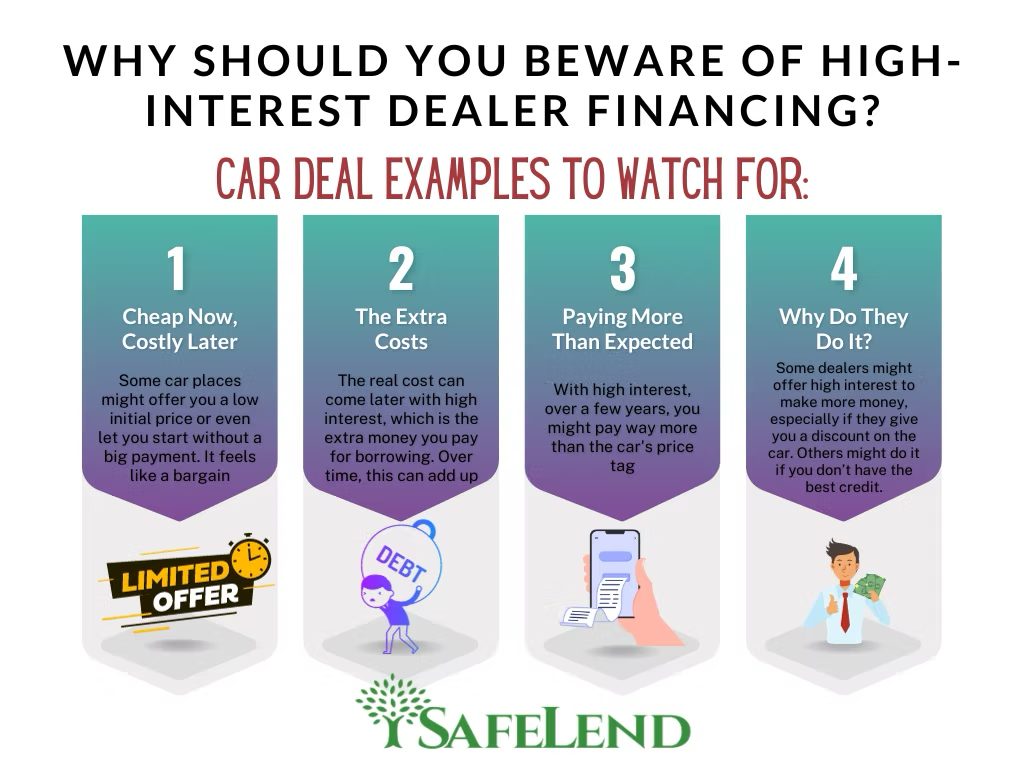
High-interest dealer financing increases the likelihood of negative equity in a car loan because it slows principal repayment while depreciation continues at full speed.
When you finance a vehicle, every monthly payment is split between interest and principal. If your loan carries a higher annual interest rate, especially one linked to a subprime rate or damaged credit profile, more of your payment goes toward covering the finance charge. This means less money is applied to reducing the loan balance, slowing your progress toward building equity.
This creates a timing problem.
Vehicles lose value quickly, especially in the first year of ownership. If your loan has a high interest rate, the principal balance goes down more slowly during that time. When depreciation outpaces repayment, the gap between what you owe and what the vehicle is worth can grow, increasing the risk of negative equity in a car loan.
Dealer-arranged financing may include interest rates that are higher than what you could qualify for with a bank or credit union. Buyers with a bad credit score or limited credit history may feel they have fewer options. Because of this, they might agree to higher rates just to get approved quickly and finalize the purchase.
The impact of high-interest financing includes:
- Slower reduction of the outstanding balance
- Higher total finance charges over the loan term
- Greater vulnerability to depreciation in the early years
- Increased difficulty refinancing later
If longer loan terms are used to lower monthly payments, the equity gap can remain for a much longer period. Although the reduced payment may ease short term pressure, extending the loan slows how quickly the principal is paid down. As a result, borrowers may stay in negative equity for several years, limiting their flexibility if they want to sell, refinance, or trade in the vehicle.
To reduce the risk, buyers should:
- Compare dealership financing offers with external lenders
- Review the annual interest rate and total cost of borrowing
- Understand how much of each payment reduces principal
- Consider improving credit standing before applying
High-interest dealer financing does not always lead to negative equity in a car loan, but it greatly increases the risk, especially when combined with zero down payments, add-ons, or rolled-in debt.
Understanding how interest rate structure affects equity position is essential before signing any auto finance agreement.
Can Auto Refinancing Fix Negative Equity in a Car Loan?
Auto refinancing does not eliminate negative equity in a car loan, but it can improve the financial structure around it under the right conditions.
Refinancing means replacing your current auto loan with a new loan, ideally one that offers a lower annual interest rate, better terms, or improved lender conditions. The purpose is to improve the structure of your debt so it fits your budget more comfortably. This may involve lowering your monthly payments, reducing total finance charges, or adjusting the repayment timeline to better match your financial situation.
Refinancing does not change the reality that you may still owe more than the vehicle is worth. If your loan balance exceeds the car's current market value, the equity gap remains. The only way to close that shortfall is to reduce the principal, either by making additional payments or by paying down the balance with cash.
Where refinancing can help is in the loan mechanics.
If your original dealership financing included a high interest rate due to a bad credit score or damaged credit profile, reducing that rate can have a meaningful impact. A lower rate allows more of each payment to go toward the principal rather than interest. Over time, this shift can help close the equity gap faster and improve your overall loan position.
Refinancing may provide:
- A lower annual interest rate
- Reduced total finance charges
- Improved cash flow through adjusted monthly payments
- Faster principal reduction if the term is not extended
But refinancing can also create new risks.
If you extend the loan term to reduce your monthly payments, you will probably pay more interest over time. While the lower payment may feel easier to handle, stretching the loan out slows how quickly the principal is paid down. This can keep you in negative equity in a car loan longer than you may expect.
Qualification also matters. Lenders evaluate:
- Credit score and payment history
- Current loan balance relative to vehicle value
- Vehicle age and mileage
- Income stability
If the vehicle is deeply upside down or if credit has not improved, refinancing may not be available or may not produce meaningful savings.
The key distinction is this:
Refinancing restructures debt, it does not remove debt.
When used strategically, particularly after your credit improves or interest rates fall, refinancing can be part of a broader plan to exit negative equity in a car loan. It works best when paired with accelerated principal payments or stronger loan terms that reduce total interest. Simply extending the loan term without improving the loan terms usually does not fix the equity problem.
Understanding whether refinancing addresses the root cause or simply shifts the timeline is essential before moving forward.
What Are the Most Common Causes of Negative Equity in Dealer Car Financing?
The most common causes of negative equity in a car loan through dealer financing include rapid vehicle depreciation, high starting loan balances, extended repayment terms, and elevated interest rates. Each of these factors alone can slow equity growth, but when they combine, the risk increases significantly. Borrowers can quickly owe more than the vehicle is worth, leaving them upside down on their auto loan and reducing their financial flexibility.
Here are the primary drivers:
1. Rapid Vehicle Depreciation
New vehicles lose value immediately after leaving the dealership lot. First-year depreciation can be significant, reducing resale value faster than the loan balance declines.
2. Zero Down Payments
Financing 100 percent of the purchase price leaves no equity cushion. Without an upfront contribution, borrowers begin the loan at full balance while depreciation starts immediately.
3. Extended Loan Terms
Longer repayment periods, such as 72 or 84 months, reduce monthly payment amounts but slow principal reduction. This extends the time it takes to build positive equity.
4. High-Interest Dealer Financing
Higher annual interest rates, often tied to subprime rates or damaged credit profiles, direct more of each payment toward interest rather than principal, widening the equity gap.
5. Rolling Old Debt Into a New Loan
Carrying over remaining balances from a previous vehicle increases the starting loan amount beyond the new vehicle's value, creating instant negative equity in a car loan.
6. Dealer Add-ons and Optional Products
Extended warranties, protection packages, documentation fees, and other Add-on Products increase the total financed amount. Many of these items depreciate quickly and may not hold resale value.
7. Paying Above Market Value
Market adjustments or overpricing can result in financing more than the vehicle's true market worth from the beginning.
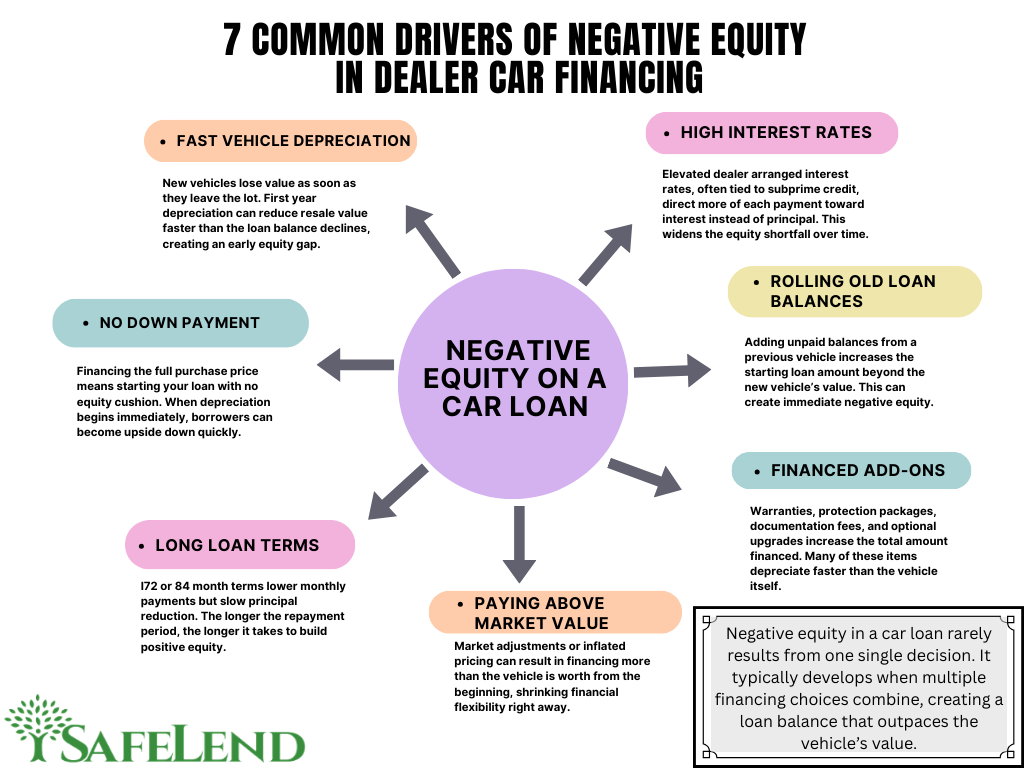
Negative equity in a car loan rarely stems from a single decision. It usually develops over time as several financing choices stack on top of one another. A zero down payment, high interest rates, extended loan terms, rolled-in fees, and optional add-ons can combine to create a larger loan balance that outpaces the vehicle's value. When these factors overlap, the equity gap widens quickly.
Understanding these common causes helps buyers review dealership financing more carefully and make smarter decisions that support long-term financial stability.
Conclusion
Auto financing decisions extend far beyond submitting an online application or securing quick approval. Every vehicle purchase affects your credit history, income, and overall financial position. While lenders may advertise competitive rates, what truly shapes your outcome is the interest rate, loan term, total interest paid, and the full structure of the finance agreement, not just the size of the monthly car payments.

Car depreciation is unavoidable, and rapid depreciation in the first year can quickly create a negative equity situation. Whether you end up upside down on a negative equity vehicle depends on how depreciation aligns with your loan terms and the original price of the car. Zero down payments, extended terms, add-ons, rolled-in debt, and higher rates can increase the gap between what you owe and what the vehicle is worth. When that balance exceeds both market value and trade-in value, the risk of entering a negative equity cycle grows.
A carefully structured auto financing plan helps reduce that risk. Reviewing your finance agreement, understanding total interest paid over time, and ensuring the vehicle price reflects market reality are key steps. Strong payment habits and informed decisions protect your financial position and help prevent unnecessary equity shortfalls.
The excitement of driving off the lot may fade, but the long-term impact of your financing choices remains. By understanding how rapid depreciation and loan structure interact, you can avoid a negative equity situation and make decisions that support lasting financial stability.
Drive informed. Finance strategically. Protect your equity.
Frequently Asked Questions About Negative Equity in a Car Loan
What does negative equity in a car loan mean?
Negative equity in a car loan means you owe more on your current auto loan than the vehicle is worth. This happens when depreciation reduces the car's value faster than your loan balance decreases, creating an equity shortfall.
How long does it take to get out of negative equity in a car loan?
The timeline depends on your interest rate, loan term, and payment structure. Making additional principal payments or securing a lower interest rate through refinancing can help reduce the equity gap faster. With long loan terms or high interest, negative equity can last several years.
Can you trade in a car with negative equity?
Yes, but the remaining balance does not disappear. The unpaid portion is typically rolled into your new loan, increasing the total amount financed. This can create immediate negative equity in the new car loan unless you cover the difference with cash.
Does a zero down payment cause negative equity?
A zero down payment increases the risk of negative equity in a car loan because you finance the full purchase price. Since vehicles depreciate quickly, starting without an equity cushion can create an immediate gap between loan balance and vehicle value.
Do long-term car loans increase the risk of negative equity?
Yes. Extended loan terms lower monthly payments but slow principal reduction. When depreciation outpaces repayment, borrowers remain in negative equity longer.

Can refinancing remove negative equity in a car loan?
Refinancing does not eliminate negative equity, but it can improve loan structure. A lower interest rate may help reduce principal faster. However, extending the loan term may prolong the equity gap.
Are dealer add-ons a major cause of negative equity?
Dealer add-ons increase the total loan amount. Many optional products depreciate quickly and may not add equivalent resale value. Financing these extras increases the likelihood of negative equity in a car loan.
Is high-interest dealer financing risky?
High-interest rates direct more of each payment toward interest rather than principal. This slows equity growth and increases total finance charges, making negative equity more likely.
Can negative equity hurt my credit score?
Negative equity itself does not directly affect your credit score. However, missed payments, rolling debt forward, or defaulting on a loan due to financial strain can damage your credit profile.
How can I avoid negative equity in a car loan?
You can reduce risk by making a meaningful down payment, choosing shorter loan terms, avoiding unnecessary add-ons, comparing interest rates, and understanding total loan cost before signing.
Important Note: This article and its resources are purely for informational use. They do not reflect the offerings of specific companies or lenders. Our goal is to provide knowledge and insights for better financial decision-making. We recommend conducting in-depth research and seeking professional advice before making any financial decisions. SafeLend Canada, while not a lender, collaborates with various lenders to assist clients in refinancing their auto loans.