
Last Updated: March 2026 (Updated to reflect current Canadian auto refinancing trends and lender requirements.)
Published: February 2024
By: Danielle Burton
Category: Trade-In
Car loans can become difficult to manage when interest rates rise, vehicle depreciation accelerates, or your financial situation changes. Many Canadians find themselves struggling with high car payments, rising monthly loan payments, or an upside down car loan, where the remaining principal balance is higher than the current car value. In some cases, borrowers may also face unexpected loan fees, prepayment penalties, or restrictive terms within their financing agreement, making it harder to exit the loan early.
If you are wondering how to get out of a car loan, several options may be available depending on your loan structure and lender. Some borrowers choose to begin the refinancing process, replacing their existing loan with a new refinance loan that may offer a lower interest rate or more manageable monthly loan payment. Others may sell the vehicle, pay the remaining payout amount, or work with their lender, whether it is a bank or credit union, to restructure the loan. In more serious situations where payments fall behind, accounts may even be transferred to a collection agency, which makes exploring solutions early even more important.
Understanding how factors like the principal balance, residual value, and overall auto refinancing options affect your loan can help you make informed decisions. In this guide, we explain how car loans work in Canada, why borrowers become upside down on a car loan, and the strategies that may help reduce payments or exit an unaffordable loan before financial pressure increases.
In This Guide: How to Get Out of a Car Loan
- 1. What Does it Means to be Upside Down on a Car Loan (Negative Equity)?
- 2. How Do Car Loans Work in Canada?
- 3. 5 Ways to Get Out of A Car Loan In Canada
- 4. How Auto Loan Refinancing Can Help You Get Out of a High Interest Car Loan
- 5. How Getting Out of a Car Loan Can Affect Your Credit Score
- 6. How to Avoid Negative Equity on Your Next Car Loan in Canada
- 7. Final Thoughts: How to Get Out of a Car Loan in Canada
- 8. Frequently Asked Questions About Getting Out of a Car Loan
What Does it Means to be Upside Down on a Car Loan (Negative Equity)?
Being upside down on a car loan, also known as negative equity, means the remaining principal balance is higher than the vehicle’s current car value. This situation often occurs when a vehicle depreciates faster than the loan balance is reduced through regular car payments. When this happens, borrowers may find themselves underwater on your car loan, meaning the remaining payoff amount is greater than the vehicle’s market value or dealer retail value. Negative equity can make it harder to sell or trade in the vehicle without covering the difference.

For example, if your vehicle is worth $20,000 but the remaining payout amount on your loan is $25,000, you have $5,000 in negative equity.
Negative equity is fairly common in Canada, especially when auto loans have long repayment terms, high interest rates, or small down payments. Because vehicles often lose value quickly in the first few years, the remaining principal balance in a financing agreement may exceed the vehicle’s market value early in the loan term. This can leave borrowers owing more than the vehicle is worth during the early stages of the loan.
Several factors can increase the likelihood of becoming upside down on a car loan, including:
- financing a vehicle for six to eight years
- rolling previous loan balances into a new loan
- high interest rates on auto financing
- purchasing a vehicle with minimal down payment
When negative equity builds, it can limit your financial flexibility. If you owe more than the vehicle is worth, selling or trading in the vehicle may require paying the difference between the remaining payoff amount and the vehicle’s market value or dealer retail value. This gap can make it harder to move into another vehicle or adjust your financing without covering the shortfall.
Exploring auto loan refinancing options from time to time may help borrowers lower their car payments, adjust their monthly loan payment, or reduce the remaining principal balance into more manageable terms. In some cases, borrowers may also consider debt consolidation, paying down other debts such as credit cards, or discussing a loan modification with their lender to improve affordability and ease financial pressure.
In Canada, long term auto financing has become more common, which can increase the likelihood of negative equity during the early years of a loan. For borrowers seeking car loan debt relief, reviewing refinancing or restructuring options early may help reduce financial pressure and prevent the situation from becoming more difficult to manage over time.
How Do Car Loans Work in Canada?
Car loans allow borrowers to finance a vehicle by spreading the cost over a set repayment period. In Canada, most auto loans use monthly loan payments that include both principal and interest.
The principal balance is the amount borrowed to purchase the vehicle, while interest represents the cost charged by the lender for providing the financing.
Understanding how car payments are structured helps borrowers better manage their loan and evaluate options such as auto refinancing if their financial situation changes.
Each payment gradually reduces the remaining principal balance while interest is charged on the amount still owed. Early in the loan term, a larger portion of the monthly loan payment usually goes toward interest. As the principal balance decreases over time, more of each payment is applied to the loan itself. Understanding this structure can help borrowers evaluate options such as auto loan refinancing if car payments become difficult to manage.
Several factors determine how much you pay for a car loan, including:
- the vehicle purchase price
- your down payment
- the interest rate offered by the lender
- the length of the loan term
In Canada, auto loan terms commonly range from 36 to 84 months. While longer terms may lower car payments in the short term, they often lead to higher total interest costs over the life of the loan.
Because vehicles depreciate quickly, longer loan terms can increase the risk of negative equity. This happens when the remaining principal balance on a vehicle loan becomes higher than the vehicle’s car value, leaving borrowers with an upside down car loan during the early years of the financing agreement. When this occurs, it can be harder to sell or trade in the vehicle without covering the difference between the loan balance and the vehicle’s value.
Understanding how your car payments are structured can help you identify ways to reduce interest costs, pay down the principal balance faster, or explore auto refinancing to lower your monthly loan payment.
What Is the Difference Between Principal and Interest on a Car Loan?
The principal is the amount of money you borrowed to purchase the vehicle. The interest is the fee charged by the lender for providing the loan and allowing you to finance the purchase over time.
When you make your monthly loan payment, the amount is split between interest and the principal balance. At the start of most car loans, a larger portion of your car payments goes toward interest because it is calculated on the remaining loan balance. As the principal balance gradually decreases over time, the amount of interest charged also declines.
Over time, a greater share of each monthly loan payment is applied toward reducing the principal balance rather than paying interest.
Understanding how this balance works can help borrowers make smarter financial decisions when managing their loan. Strategies such as making extra payments toward the principal balance or exploring auto refinancing may help reduce the total interest paid over the life of the loan and make car payments more manageable over time.
Canadian lenders, including banks and credit unions, review factors like credit score, income stability, and existing debt when setting the interest rate on a vehicle financing agreement.
5 Ways to Get Out of a Car Loan in Canada
Quick Summary: Ways to Get Out of a Car Loan
- refinance your auto loan
- sell the vehicle
- trade in the car
- make additional principal payments
- negotiate options with your lender
In Canada, refinancing options may vary depending on the lender, whether it is a bank or credit union, the vehicle’s car value, and the borrower’s credit profile.
If your auto loan has become difficult to manage due to rising interest rates, higher car payments, or an upside down car loan, several strategies may help lower your monthly loan payment or help you exit the loan responsibly. The best option often depends on your remaining principal balance, the vehicle’s current value, and the terms of your financing agreement, including any loan fees or prepayment penalties.
Below are some of the most common ways Canadians work toward getting out of a car loan.
Refinance Your Auto Loan
Auto refinancing is often one of the most effective ways to improve the affordability of a car loan.
The refinancing process replaces your existing loan with a new refinance loan that may offer:
- a lower interest rate
- a different loan term
- a reduced monthly loan payment
If your credit score has improved since you originally financed the vehicle, you may qualify for better lending terms through a bank, credit union, or specialized auto lender. A stronger credit profile may help you secure a lower interest rate or more favourable loan terms. Lower interest rates can reduce the total cost of borrowing and help make car payments more manageable over time.
Refinancing may also help borrowers manage their current car loan by restructuring the remaining principal balance into a more manageable payment plan and lowering ongoing car payments. This can be especially helpful for borrowers who have negative equity on their car loan, where the remaining payout amount is higher than the vehicle’s market value or dealer retail value. However, eligibility for auto refinancing typically depends on factors such as the vehicle’s age, mileage, the remaining payout amount, and your overall credit profile, income stability, and ability to meet the lender’s approval requirements.
Sell the Vehicle and Pay Off the Loan
Another option is selling the vehicle privately and using the proceeds to pay off the remaining payout amount on the loan.
If the vehicle’s current car value is close to the remaining principal balance, this strategy may allow borrowers to exit the loan without carrying ongoing car payments.
However, if the vehicle is worth less than the loan balance, the borrower must pay the difference in order to fully close the loan and release the lender’s lien.
Because private sales often generate higher sale prices than trade ins, this approach may help reduce the amount needed to cover an upside down car loan.
Trade In the Vehicle for a More Affordable Car
Some borrowers choose to trade in their vehicle for a lower cost car with a smaller loan balance and more manageable car payments.
In certain cases, the remaining principal balance may be rolled into a new financing agreement on the replacement vehicle. While this can lower the monthly loan payment, it may also increase the total amount financed if negative equity from an upside down car loan is included in the new loan.
Borrowers should review the terms carefully to understand how rolling the balance into a new loan may affect long term costs.
This strategy tends to work best when the replacement vehicle has a significantly lower purchase price and the new loan terms help reduce overall car payments and improve long term affordability.
Make Extra Principal Payments
Making additional payments directly toward the principal balance can help reduce the remaining loan faster.
Because interest is calculated based on the outstanding loan balance, paying down the principal sooner may lower the total interest paid over the life of the loan and reduce long term car payments.
Even small additional payments applied consistently can shorten the loan term and reduce the time it takes to build positive equity in the vehicle.
Before making extra payments, borrowers should review their financing agreement to confirm whether the lender charges prepayment penalties or additional loan fees.
Speak With Your Lender About Options
If your financial situation has changed significantly, contacting your lender early may help identify available options before payments are missed. Some lenders may offer temporary payment adjustments, loan extensions, or a loan modification that helps borrowers stay current on their monthly loan payment. These solutions can provide short term car loan debt relief if car payments become difficult to manage.
In some cases, lenders may explain the auto loan refinancing process, review early payout amount options, or discuss whether a new refinance loan could help reduce the remaining principal balance and make payments more manageable. Borrowers who are underwater on your car loan, meaning the balance is higher than the vehicle’s market value or dealer retail value, may also consider options like debt consolidation or reducing other debts such as credit cards to improve their financial stability.
Addressing the situation early can help borrowers avoid serious consequences such as loan default or having the account sent to a collection agency. Acting quickly also gives borrowers time to review their options and speak with their lender about possible solutions. Exploring strategies like auto loan refinancing may help reduce financial pressure, lower car payments, or restructure the remaining principal balance before the situation becomes more difficult to manage.
How Auto Loan Refinancing Can Help You Get Out of a High Interest Car Loan
Auto refinancing allows borrowers to replace their existing car loan with a new refinance loan that offers improved terms. For many Canadians, this may result in lower car payments, reduced interest rates, or a more manageable repayment schedule. Refinancing can also help restructure the remaining principal balance into a more affordable monthly loan payment, making it easier to keep up with payments over time.
The refinancing process may also help borrowers who are underwater on your car loan, where the remaining payoff amount is higher than the vehicle’s market value or dealer retail value. By reviewing auto loan refinancing options through a bank or credit union, borrowers may be able to secure better loan terms and lower car payments, improving long term affordability.
Auto refinancing works by paying off your original car loan with a new refinance loan from another lender, such as a bank or credit union. You then begin making monthly loan payments under the new terms. Depending on your credit profile, remaining principal balance, and the vehicle’s current car value, the refinancing process may help lower your car payments and reduce the total cost of the loan.
Many drivers consider refinancing when they are experiencing:
- high interest rates from their original loan
- improved credit scores since purchasing the vehicle
- financial changes that require lower monthly payments
- negative equity that needs to be managed over time
In Canada, auto loan refinancing can help borrowers regain control of their finances by restructuring their loan into a more affordable payment plan.
What Are the Benefits of Auto Loan Refinancing?
Refinancing a car loan may provide several financial advantages depending on the borrower’s situation.
Potential benefits include:
- Lower interest rates that reduce the total cost of borrowing
- Lower monthly payments that improve monthly cash flow
- Flexible loan terms that better match your financial goals
- Improved debt to income ratios, which may help when applying for other credit such as a mortgage
For borrowers struggling with high payments, refinancing may provide a practical way to stabilize their finances while continuing to keep their vehicle.
Some Canadians choose to review refinancing options through platforms like SafeLend Canada, which helps borrowers compare auto loan solutions and potentially reduce their monthly payments.
Before deciding whether refinancing is the right solution, it is important to understand how changing a car loan may affect your credit profile.
How Getting Out of a Car Loan Can Affect Your Credit Score
Getting out of a car loan can affect your credit score depending on how the loan is handled. In many cases, responsibly paying off the loan or using auto refinancing to replace it with a new refinance loan may have a neutral or even positive long term impact on your credit profile. Managing the process carefully and continuing to make payments on time can help protect your credit history.
Car loans are installment loans, which means they contribute to your overall credit mix and payment history. Making consistent monthly loan payments and gradually reducing the principal balance can help build a positive credit record . Over time, this can strengthen your credit profile and show lenders responsible borrowing behaviour. However, missed car payments or loan defaults can significantly damage your credit score and may remain on your credit report for several years.
When exploring ways to get out of a car loan, it is important to consider how changes to your financing agreement, payment history, and overall debt levels may affect your credit profile.
Does Refinancing a Car Loan Hurt Your Credit?
Refinancing a car loan may involve a credit inquiry from the new lender. In some cases, this inquiry can cause a small and temporary decrease in your credit score.
However, if auto refinancing leads to more manageable car payments or a lower monthly loan payment, it may help borrowers avoid missed payments and maintain a positive credit history. Consistently making on time payments and gradually reducing the remaining principal balance are important factors that support long term credit health. For many borrowers, restructuring the loan through a refinance loan can provide better payment stability.
Many lenders allow borrowers to explore refinancing options using soft credit checks, which typically do not affect credit scores. These checks can help borrowers review potential loan terms and better understand the refinancing process before committing to a new financing agreement. This can make it easier to compare options and decide whether refinancing is the right choice.
Does Paying Off a Car Loan Affect Your Credit Score?
Paying off a car loan can affect your credit differently depending on your overall credit profile and how the loan was managed. In some cases, closing an installment loan may cause a small and temporary change in your credit score because it alters your credit mix. This change is usually minor, especially if you have a strong history of making payments on time.
However, successfully paying off a vehicle loan and eliminating ongoing car payments shows responsible borrowing behaviour. Making your monthly loan payment on time, reducing the principal balance, and lowering other debts like credit cards can help strengthen your credit history. A strong payment record may also improve your chances of qualifying for future financing options, including auto loan refinancing, debt consolidation, or other forms of car loan debt relief.
For most borrowers, maintaining consistent on time payments remains the most important factor for building and protecting credit scores.
How Late Payments Can Impact Your Credit
If a borrower begins missing car payments, the impact on credit can be significant. Payment history is one of the most important factors used by credit scoring models and plays a major role in overall credit health. Late or missed payments can quickly affect a borrower’s credit score and may remain on a credit report for several years, making it harder to qualify for future loans or favourable financing terms.
Late payments reported to Canadian credit bureaus such as Equifax and TransUnion can remain on a credit report for several years and may affect future borrowing opportunities. A history of missed payments can make it harder to qualify for loans or favourable interest rates. Because of this, exploring options like auto loan refinancing, restructuring payments, or selling the vehicle early may help borrowers protect their credit profile and avoid long term credit damage.
How to Avoid Negative Equity on Your Next Car Loan in Canada
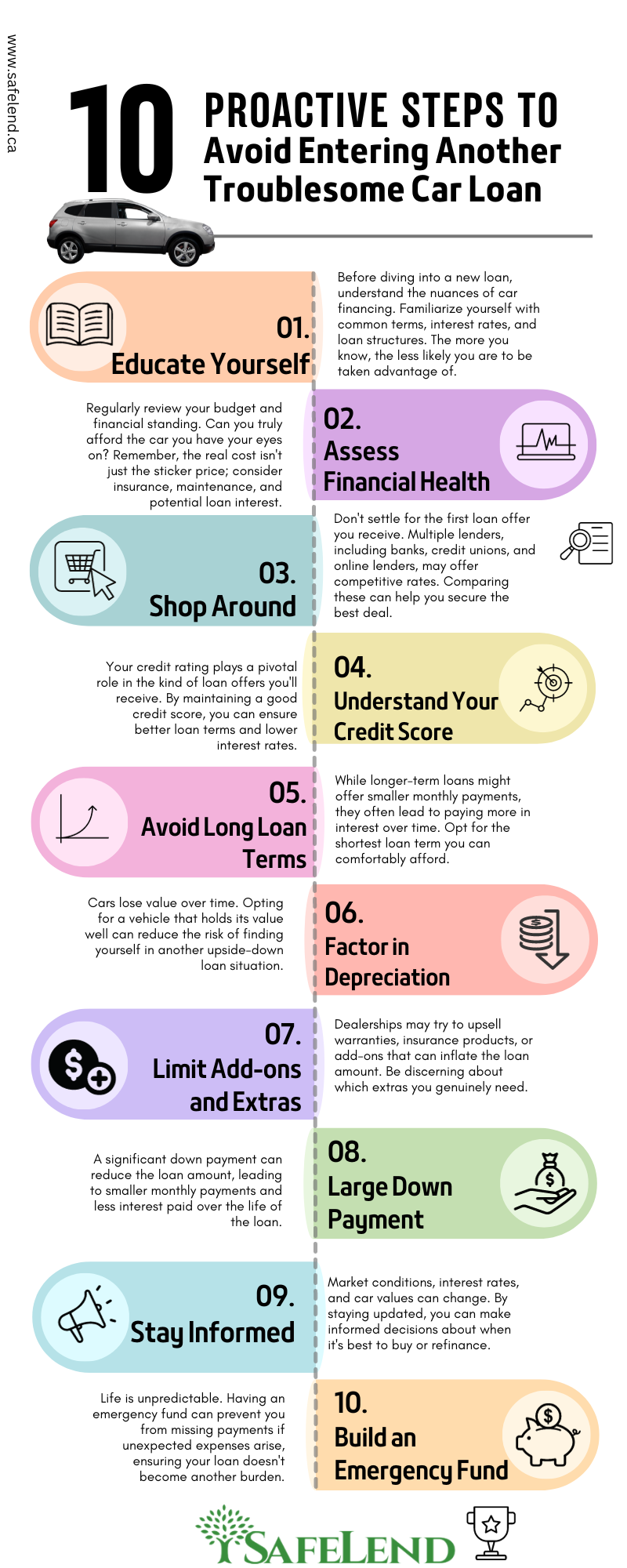
Negative equity is a common challenge for many vehicle owners, but there are practical steps that can reduce the risk when entering a new financing agreement for a vehicle. By understanding how auto loans work and planning their financing strategy carefully, borrowers can improve their chances of maintaining positive equity and keeping car payments manageable over the life of the loan.
When the remaining principal balance on a vehicle loan becomes higher than the vehicle’s car value, borrowers may end up with an upside down car loan. This can happen when vehicles depreciate faster than the loan balance is reduced through regular car payments. Understanding how loan terms, depreciation, and payment structure affect the balance can help borrowers make better financing decisions. The following strategies may help reduce the likelihood of this situation developing over time.
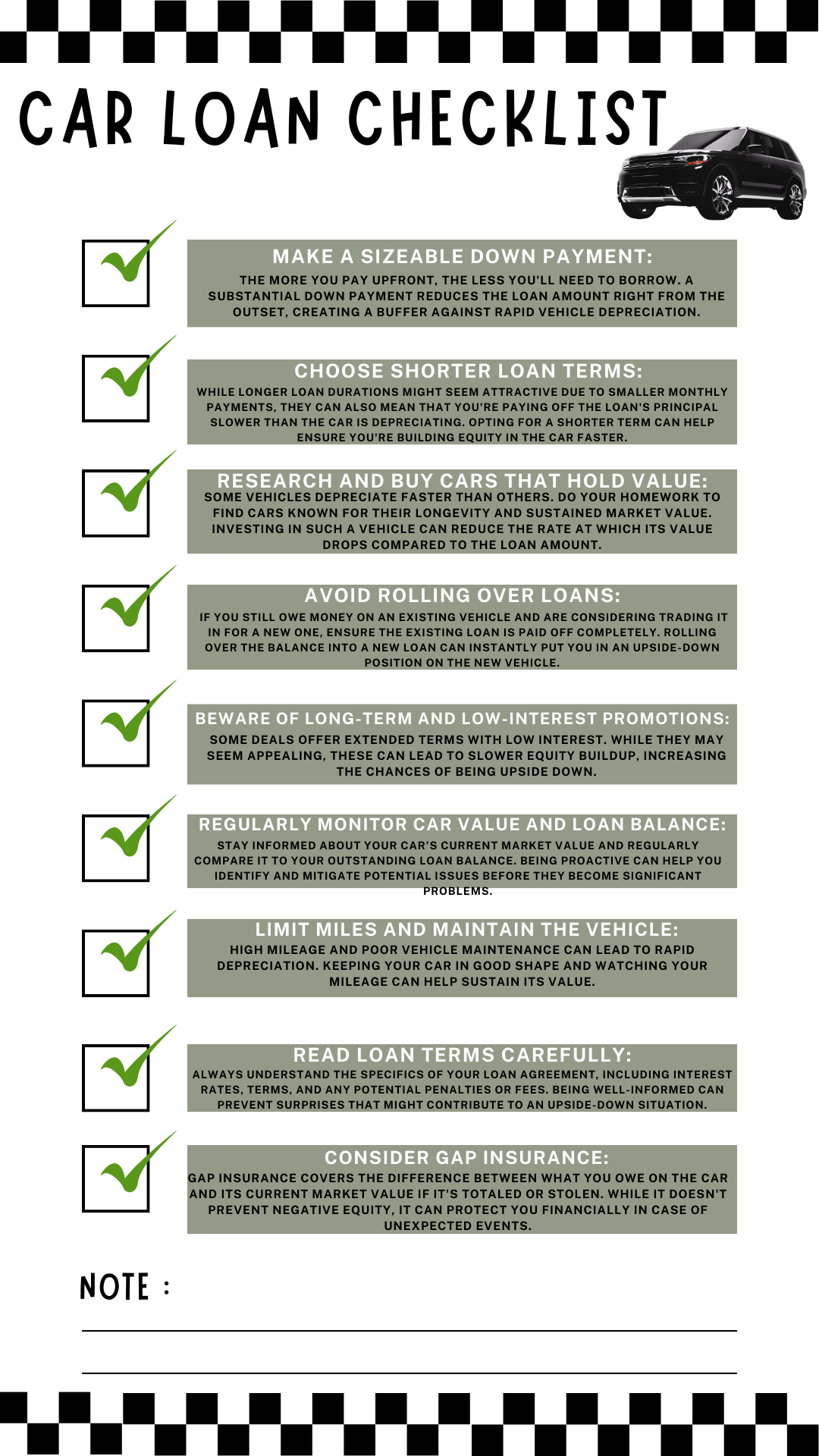
Choose a Shorter Loan Term
Long loan terms can reduce your monthly loan payment, but they also increase the risk of negative equity. Vehicles often depreciate faster than the principal balance is paid down through regular car payments. When this happens, the loan balance may remain higher than the vehicle’s value for a longer period of time, making it harder for borrowers to sell or trade in the vehicle without covering the difference.
In Canada, many auto loans now run between six and eight years. While these longer terms may lower car payments in the short term, they can extend the time it takes to reduce the principal balance. Shorter loan terms allow borrowers to pay down the balance faster and limit the total interest paid over the life of the loan.
Avoid Rolling Old Debt Into a New Loan
Some borrowers trade in a vehicle that still has a remaining payout amount and roll that balance into a new financing agreement. While this may make it easier to move into another vehicle, it increases the new principal balance and may leave borrowers owing more than the vehicle’s market value or dealer retail value. Whenever possible, paying off the existing loan before financing another vehicle may help prevent an upside down car loan and reduce the risk of carrying negative equity into the next loan.
Understand the Total Cost of the Loan
Many borrowers focus mainly on the monthly loan payment rather than the total cost of the loan. However, factors such as the interest rate, loan term, and remaining principal balance determine how much you ultimately pay over time. Understanding the full structure of your financing agreement can help you manage car payments more effectively and evaluate options like auto loan refinancing if costs become difficult to manage.
Review Refinancing Options If Your Situation Changes
Financial situations can change over time. If interest rates decrease or your credit profile improves, the refinancing process may offer an opportunity to replace your existing loan with a more affordable refinance loan. This can help lower car payments or create a more manageable repayment plan depending on the new loan terms.
Reviewing auto refinancing options from time to time can help borrowers find ways to lower car payments, adjust their monthly loan payment, or reduce the remaining principal balance. For borrowers facing rising payments or an upside down car loan, refinancing may provide a way to improve affordability before negative equity becomes a longer term challenge.
Canadian lenders, including banks and credit unions, review factors such as credit score, income stability, and existing debts when approving a vehicle financing agreement.
Final Thoughts: How to Get Out of a Car Loan in Canada
Getting out of a car loan may feel overwhelming, especially if the loan carries a high interest rate or the vehicle’s current car value or market value is lower than the remaining principal balance. Many Canadians find themselves dealing with rising car payments, restrictive terms within their financing agreement, or unexpected loan fees and prepayment penalties that make it harder to exit the loan early. When the remaining payoff amount exceeds the vehicle’s dealer retail value, borrowers may owe more than the vehicle is worth. This can limit financial flexibility and make it harder to sell or trade in the vehicle.

Fortunately, several strategies can help borrowers regain control of their auto financing. Options such as auto loan refinancing, selling the vehicle and paying the remaining payout amount, trading in for a more affordable vehicle, or making extra payments toward the principal balance may help lower car payments and reduce financial pressure. In some situations, borrowers may also consider debt consolidation, especially if credit cards or other debts are adding financial strain. These approaches can provide meaningful car loan debt relief when managed carefully.
Understanding how car loans work, how an upside down car loan develops, and how factors such as residual value, interest rates, and loan terms influence your monthly loan payment allows borrowers to make more informed financial decisions. For many Canadians, reviewing the refinancing process with a bank or credit union may provide a practical way to secure a more manageable refinance loan and lower ongoing car payments. In some cases, lenders may also discuss options such as a loan modification if borrowers are experiencing financial hardship.
Platforms like SafeLend Canada allow borrowers to explore auto refinancing options and compare loan structures that may lower their monthly loan payment or reduce the remaining principal balance. Before making changes to your auto loan, it is important to review all available options and consider how different strategies could affect your finances, credit profile, and long term loan costs.
Frequently Asked Questions About Getting Out of a Car Loan
1. Can you get out of a car loan early in Canada?
Yes, it is possible to get out of a car loan early, but the process depends on your loan agreement and the remaining balance. Common options include refinancing the loan, selling the vehicle and paying off the remaining balance, trading in the vehicle for a lower cost car, or paying the loan off early if you have the funds available. Some lenders may charge prepayment penalties, so it is important to review your loan contract before making changes.
2. Can you sell a car that still has a loan on it?
Yes, but the loan must be paid off before ownership can be transferred to the buyer. In most cases, the lender holds a lien on the vehicle until the loan balance is fully repaid. If the sale price is lower than the remaining loan balance, the borrower must pay the difference in order to close the loan.
3. Does refinancing a car loan hurt your credit score?
Refinancing a car loan may involve a credit inquiry from a lender, which can cause a small temporary drop in your credit score. However, if refinancing helps you lower your monthly payments and maintain consistent on time payments, it may benefit your credit profile over time. Payment history is one of the most important factors in credit scoring models.
4. Can you refinance a car loan if you have negative equity?
In some cases, refinancing may still be possible if you owe more than the vehicle is worth, although eligibility depends on the lender, loan balance, and vehicle value. Some lenders allow refinancing with limited negative equity, while others may require additional equity or a stronger credit profile. Refinancing can sometimes help restructure the loan into more manageable payments.
5. What happens if you cannot afford your car loan payments?
If you are struggling to keep up with car loan payments, it is important to contact your lender as soon as possible. Some lenders may offer temporary payment relief, loan extensions, or restructuring options. Ignoring missed payments can lead to loan default, vehicle repossession, and long term damage to your credit score.
6. Is trading in a car with negative equity a good idea?
Trading in a vehicle with negative equity may be possible, but the remaining loan balance is often rolled into the new loan. This increases the total amount financed and may raise monthly payments. In some situations, trading into a significantly less expensive vehicle can still help improve affordability.
Important Note: This article and the provided resources are intended for informational purposes only. They do not represent the programming of any specific companies or lenders. The content is designed to offer information and insights to help you make informed financial decisions. Always conduct thorough research and consider professional advice before making any financial choices.