


Last Updated: March 2026 (Updated to reflect current Canadian auto refinancing trends and lender requirements.)
Published: March 2024
By: Danielle Burton
Category: Auto Refinance
Car loan refinance in Canada means replacing your current auto loan with a new loan that pays off the remaining balance and creates a new repayment agreement. The new loan may offer a lower interest rate, lower monthly payments, or a shorter loan term, helping reduce overall vehicle financing costs.
For many Canadians, refinancing is not just about chasing a lower rate. It can be a strategic financial decision that improves cash flow, debt management, and long-term financial stability.
Borrowers often consider refinancing when:
- interest rates have dropped
- their credit score has improved
- monthly payments have become difficult to manage
- they want to adjust their loan terms to better fit their finances
Understanding your current loan terms, vehicle value, and credit situation is the first step toward determining whether refinancing can unlock real savings.
At SafeLend Canada, we help Canadians review their current car loan, compare refinance options, and find ways to reduce the cost of vehicle ownership. This guide explains how refinancing works, how rates are determined, and what strategies may help you secure better financing terms.
What Will You Learn About Car Loan Refinancing in Canada?
In this guide, you’ll learn how car loan refinancing works in Canada and how to decide if it’s the right financial move for you.
- 1. How Do Car Loan Refinance Rates Work in Canada?
- 2. Who Qualifies for Car Loan Refinancing in Canada?
- 3. How Credit Scores Impact Auto Refinance Approval
- 4. Step-by-Step Process for Refinancing a Car Loan in Canada
- 5. Is Car Loan Refinancing Always the Right Choice?
- 6. Common Myths About Car Loan Refinancing
- 7. Pros and Cons of Extending Your Car Loan Term
- 8. Key Takeaways for Car Loan Refinancing in Canada
- 9. Frequently Asked Questions About Auto Loan Refinancing in Canada
How Do Car Loan Refinance Rates Work in Canada?
Car loan refinance rates determine how much interest you pay on a new loan that replaces your existing vehicle loan. These rates directly affect both your monthly car payment and the total amount you repay over time. In Canada, refinance rates vary by lender and borrower profile.
When refinancing, borrowers may receive a different interest rate, loan term, or payment structure depending on their credit profile, vehicle details, and current market conditions.
Understanding how refinance rates work can help you determine whether replacing your current auto loan will lead to meaningful financial savings.
What Is an Auto Loan Refinance Rate?
An auto loan refinance rate is the interest rate applied to your new loan when you refinance your existing car loan.
It represents the cost of borrowing and is typically expressed as an annual percentage rate (APR).
For example:
- A 5 percent rate on a $10,000 loan equals about $500 per year in interest before principal is applied
The lower the rate, the less you pay over time. This is why many borrowers refinance when they qualify for better terms than their original loan.
What Factors Affect Car Loan Refinance Rates in Canada?
Several factors influence the refinance rate you may receive when applying for a new car loan. The most common include:
Credit Score
Your credit score is one of the most important factors. Borrowers with strong credit and consistent payment history typically qualify for lower interest rates and better loan options.
Current Loan Details
Lenders review your remaining loan balance, repayment history, and loan term. A strong payment record may improve your chances of securing better terms.
Vehicle Details
The age, mileage, and market value of your vehicle can affect eligibility. Newer vehicles with higher value are generally considered lower risk.
Market Interest Rates
Broader economic conditions also play a role. According to the Bank of Canada , changes to its policy interest rate can influence borrowing costs across Canada, which may affect auto loan refinance rates.
Lender Policies
Each lender uses different risk models and lending criteria, which can result in varying rates and loan terms.
Fixed vs Variable Refinance Rates: What’s the Difference?
When refinancing a car loan, borrowers may be offered either a fixed or variable rate.
Fixed Rates
A fixed rate stays the same throughout the loan term, meaning your monthly car payment remains consistent and easier to budget.
Variable Rates
Variable rates change with market conditions. While they may start lower than fixed rates, they can increase if interest rates rise.
Most auto refinance loans in Canada use fixed rates because they provide predictable monthly payments. Variable rates are less common in Canadian auto refinancing.
How to Compare Auto Loan Refinance Offers in Canada
Before accepting a refinance offer, it is important to look beyond just the monthly payment. The total cost of the loan can vary based on interest rates, loan terms, and lender fees. The Financial Consumer Agency of Canada recommends reviewing loan terms and the total cost of borrowing before choosing vehicle financing. (Source: Government of Canada)
When comparing refinance offers, consider the following:
- interest rate
- loan term length
- total cost of borrowing
- lender fees or prepayment penalties
- repayment flexibility
A lower monthly payment does not always mean a better loan. Extending the loan term may reduce payments but increase the total interest paid over time.
Carefully reviewing the full loan structure
Can You Negotiate Auto Loan Refinance Terms?
Auto loan refinance terms may be negotiable, especially if your financial situation has improved.
You may have more leverage if you:
- have improved your credit score
- have received competing refinance offers
- have demonstrated consistent payment history
In these cases, lenders may offer lower rates or more favourable loan terms.
Working with a refinance platform or broker can also help you compare multiple offers and strengthen your negotiating position.
Pro Tip: Always review the full loan agreement before refinancing. Pay close attention to lender fees, prepayment penalties, and any conditions that could increase the total cost of borrowing.
Understanding refinance rates and loan terms helps you decide whether refinancing will reduce your overall vehicle financing costs.
Who Qualifies for Car Loan Refinancing in Canada?
Not every borrower qualifies for auto loan refinancing, but many Canadians may still be eligible if they meet certain financial and vehicle requirements.
Lenders typically review your credit history, loan balance, income, and vehicle condition when assessing eligibility.
Meeting these criteria can improve your chances of securing better loan terms, lower interest rates, or more manageable monthly payments.
Understanding these factors can help you decide whether refinancing your current car loan is a realistic option.
Key Requirements for Refinancing a Car Loan
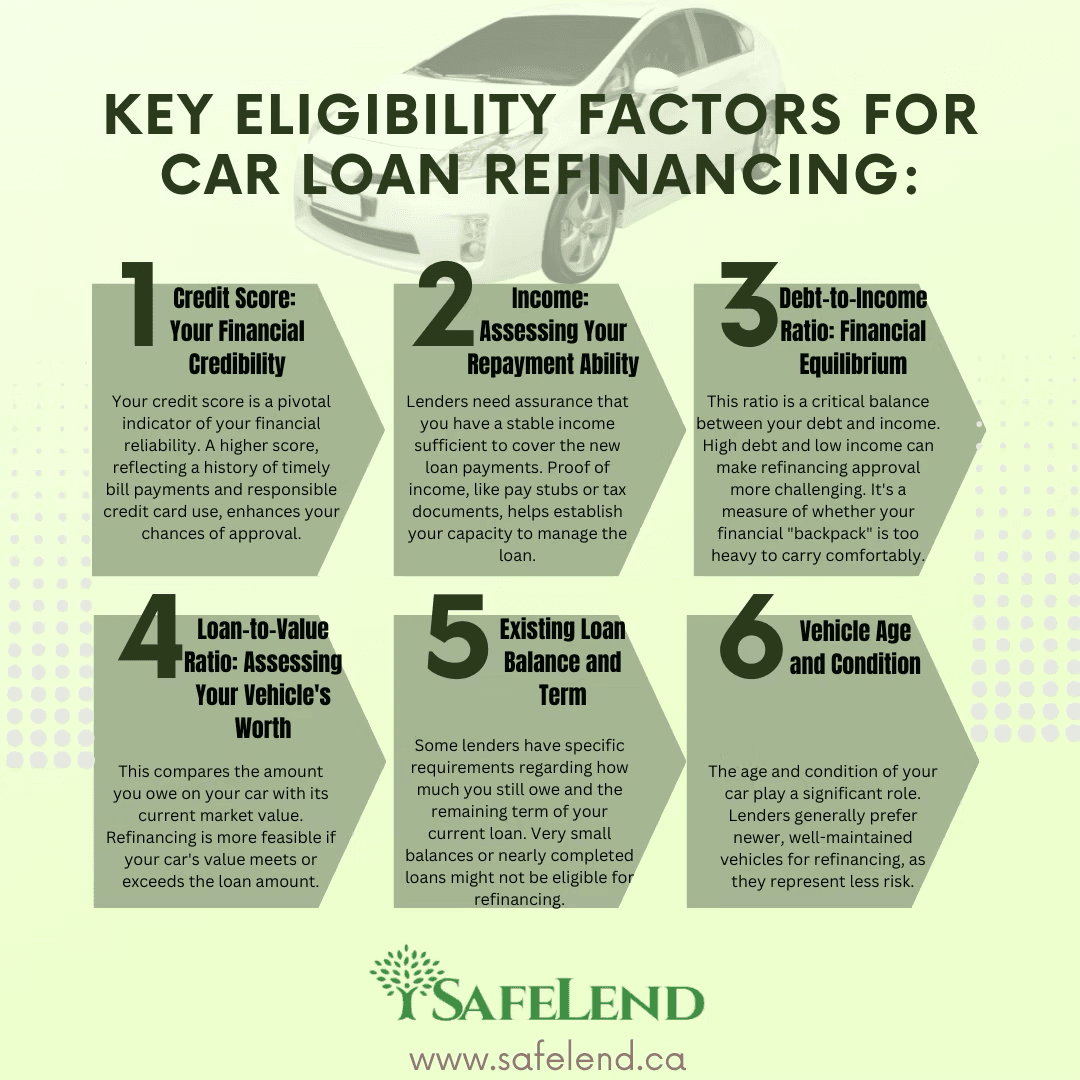
While requirements vary by lender, most financial institutions consider the following factors:
Credit Score
Your credit score plays a major role in approval. Borrowers with stronger credit profiles typically qualify for lower interest rates and more favourable loan terms.
Refinancing may still be possible with lower credit scores, especially if you have a strong payment history on your current vehicle loan.
Payment History
A consistent record of on-time payments shows responsible borrowing and may improve your chances of approval.
If you have missed payments recently, you may need to rebuild your payment history before qualifying.
Remaining Loan Balance
Most lenders require a minimum remaining balance to refinance.
If your loan is nearly paid off, refinancing may not provide meaningful savings. Refinance programs typically work best when a significant portion of the balance remains.
Vehicle Age and Mileage
Your vehicle must meet certain eligibility criteria. Lenders typically review:
- vehicle age
- mileage
- current market value
- overall condition
Newer vehicles with lower mileage are generally easier to refinance because they represent lower risk.
Income and Debt Levels
Your income and existing financial obligations are also considered.
Lenders assess whether your debt-to-income ratio supports the new loan. Stable income and consistent employment improve your chances of approval.
When Is a Good Time to Refinance a Car Loan?
Refinancing may be worth considering when your financial situation improves or market conditions change.
Common situations where refinancing may make sense include:
- your credit score has improved since your original loan
- interest rates have dropped
- your monthly car payments are becoming difficult to manage
- you want to shorten your loan term
- you want to replace high-interest dealer financing
If one or more of these apply, refinancing your car loan may help reduce the overall cost of vehicle financing.
Can You Refinance a Car Loan With Bad Credit?
Yes, refinancing a car loan may still be possible even if your credit is less than perfect.
Some lenders specialize in subprime auto loan refinancing and look beyond your credit score, considering factors like payment history, income stability, and vehicle value.
However, lower credit scores may result in higher interest rates or fewer loan options, making it important to compare offers carefully.
Improving your credit score before applying can increase your chances of approval.
Helpful strategies include:
Key Insight: Even if you do not qualify for refinancing today, improving your credit score, lowering debt, and making consistent loan payments can strengthen your chances of qualifying later.
How Credit Scores Affect Car Loan Refinancing in Canada
Your credit score plays a major role in whether you qualify for car loan refinancing and the interest rate you may receive.
In Canada, credit scores typically range from 300 to 900. A higher score signals stronger borrowing history and lower lending risk, which can help you secure better rates and loan terms.
Understanding how lenders assess credit can help you prepare for refinancing and improve your chances of approval.
What Credit Score Do You Need to Refinance a Car Loan?
There is no single minimum credit score required to refinance a car loan in Canada. However, lenders typically group borrowers into different credit tiers.
Common credit score ranges for car loan refinancing in Canada include:
- 700 to 900: Excellent credit, often qualifies for the lowest interest rates
- 660 to 699: Good credit, usually qualifies for competitive refinancing options
- 600 to 659: Fair credit, refinancing may still be available with higher rates
- Below 600: Subprime credit, refinancing may still be possible but options may be limited
Even with a lower credit score, you may still qualify if you have a consistent payment history and stable income.
Why Credit Scores Matter to Lenders
Lenders use your credit score to assess your risk as a borrower.
A strong score signals responsible financial behavior, such as making payments on time and managing debt effectively. As a result, borrowers with stronger credit profiles may qualify for lower interest rates, more flexible terms, and faster approval.
Those with lower scores may still qualify, but lenders may charge higher rates to offset the increased risk.
Benefits of Refinancing With a Strong Credit Score
If your credit score has improved since you first financed your vehicle, refinancing your car loan may offer several financial benefits.
These may include:
- qualifying for lower interest rates
- reducing your monthly car payments
- shortening your loan term
- lowering the total interest paid over time
Many Canadians refinance after improving their credit to replace high-interest dealer financing with more competitive loan options.
How to Improve Your Credit Score Before Refinancing
If your credit score needs improvement, taking a few steps before applying can increase your chances of approval.
Helpful strategies include:
- making all loan and credit card payments on time
- reducing outstanding credit card balances
- reviewing your credit report for errors
- avoiding new debt before applying
Even small improvements can help you qualify for better refinancing options and lower interest rates.
Your credit score is one of the most important factors in auto refinancing. By improving your credit profile and maintaining consistent payment history, you can strengthen your eligibility and unlock better refinancing opportunities.
Now that you understand how credit affects approval, the next step is learning how the refinancing process works.
How to Refinance a Car Loan in Canada: Step-by-Step (Using SafeLend Canada)
Refinancing a car loan in Canada involves reviewing your current loan, comparing new options, and replacing it with one that offers better terms.
While borrowers can refinance through banks, dealerships, or credit unions, many Canadians use platforms like SafeLend Canada to compare multiple lenders and simplify the process.
Below is a typical step-by-step overview.
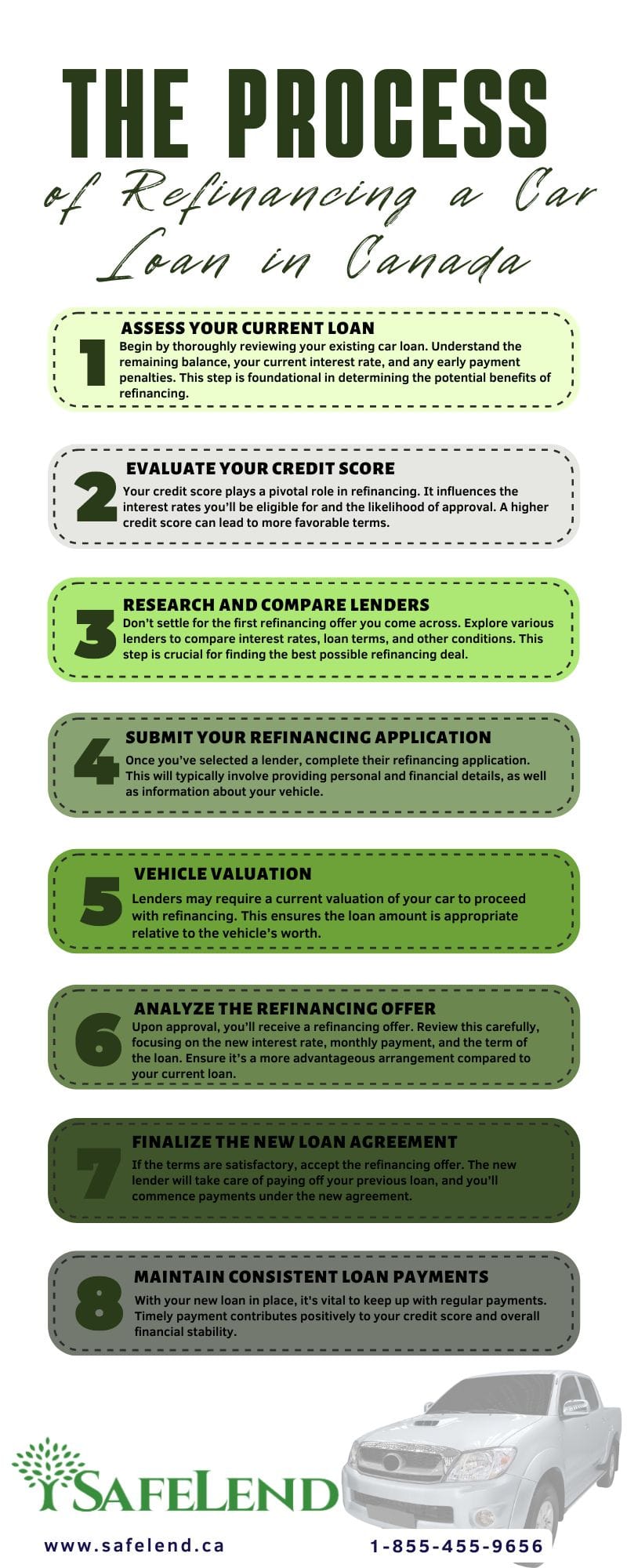
Step 1: Review Your Current Vehicle Loan
Start by understanding the details of your existing loan, including:
- remaining balance
- current interest rate
- monthly payment
- remaining term
- any prepayment penalties
Many borrowers begin with a quick refinance review through SafeLend Canada to see if switching loans could reduce overall costs.
Step 2: Complete a Quick Refinance Assessment
Most platforms begin with a simple online review to evaluate eligibility. With SafeLend Canada, this typically includes:
- credit profile
- income stability
- current loan details
- vehicle information
This step helps determine whether refinancing could lower payments or improve your loan terms.
Step 3: Compare Loan Offers From Multiple Lenders
One of the biggest advantages of using a refinance platform is the ability to compare multiple lenders at once.
Instead of applying individually, platforms like SafeLend Canada connect you with lenders across different credit profiles.
This allows you to compare:
- interest rates
- loan terms
- payment structures
- potential savings
Borrowers who go through dealerships may have access to fewer options.
Step 4: Submit a Refinance Application
Once you choose an option, you’ll complete a formal application. This usually includes:
This usually includes:
- personal identification
- employment and income details
- vehicle information
- current loan details
Many platforms handle this process online, making it faster than traditional applications.
Step 5: Loan Approval and Payoff
After approval, the new lender pays off your existing loan.
Platforms like SafeLend Canada often coordinate this process with your previous lender, making the transition seamless.
You then begin payments on your new loan.
Step 6: Start Your New Loan With Improved Terms
Once finalized, you begin repayment under the new agreement.
Depending on the terms, this may result in:
- lower monthly payments
- reduced interest costs
- a shorter loan term
- improved cash flow
Refinancing replaces your existing loan with one that better fits your current financial situation.
Refinancing replaces your existing loan with one that better fits your current financial situation. By comparing lenders and exploring options with SafeLend Canada, you may find opportunities to reduce the overall cost of your vehicle financing.
Is Car Loan Refinancing Always the Right Choice?
Car loan refinancing can offer benefits like lower monthly payments, reduced interest costs, or improved loan terms. However, it is not the right solution for every situation.
Before applying, it is important to determine whether refinancing will actually improve your financial position. The Financial Consumer Agency of Canada recommends reviewing loan terms, repayment schedules, and the total cost of borrowing before taking on new vehicle financing.
When Refinancing a Car Loan Makes Sense
Refinancing may be a good option if:
- your credit score has improved since your original loan
- you qualify for a lower interest rate
- your monthly car payments are becoming difficult to manage
- you want to shorten your loan term and reduce total interest
- you want to replace high-interest dealer financing
In these situations, refinancing may help reduce long-term costs and improve cash flow.
When Refinancing May Not Be the Best Option
Refinancing may not make sense if:
- prepayment penalties outweigh potential savings
- your credit score has declined
- your loan is nearly paid off
- current rates are higher than your existing rate
In these cases, refinancing may not reduce your total loan cost.
Focus on Total Savings, Not Just Monthly Payments
A lower monthly payment does not always mean a better loan. Extending your loan term can reduce payments but increase the total interest paid over time.
Before refinancing, compare the total loan cost, interest rate, and repayment timeline to determine if it improves your financial situation.
Common Myths About Car Loan Refinancing
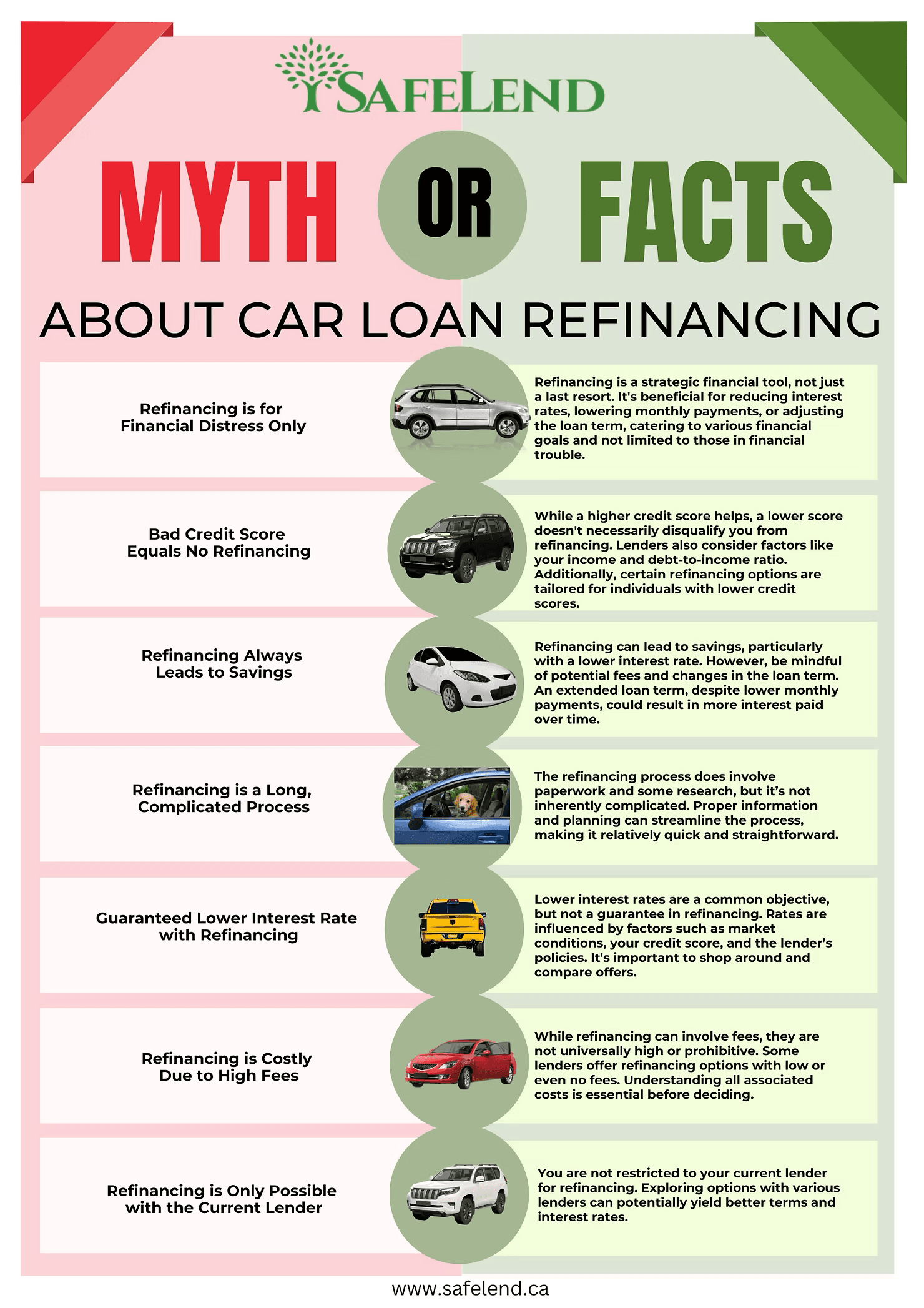
Car loan refinancing is often misunderstood. Some borrowers assume it is complicated, risky, or only available to those with perfect credit. In reality, refinancing can be a flexible financial tool when used strategically.
Key Takeaway
Understanding how auto loan refinancing works helps you make more informed financial decisions. Separating myths from facts allows you to evaluate whether refinancing fits your situation.
The Pros and Cons of Extending Your Car Loan Term Through Refinancing
Refinancing a car loan may involve extending your loan term to reduce monthly payments. While this can provide short-term relief, it is important to understand both the benefits and potential drawbacks.
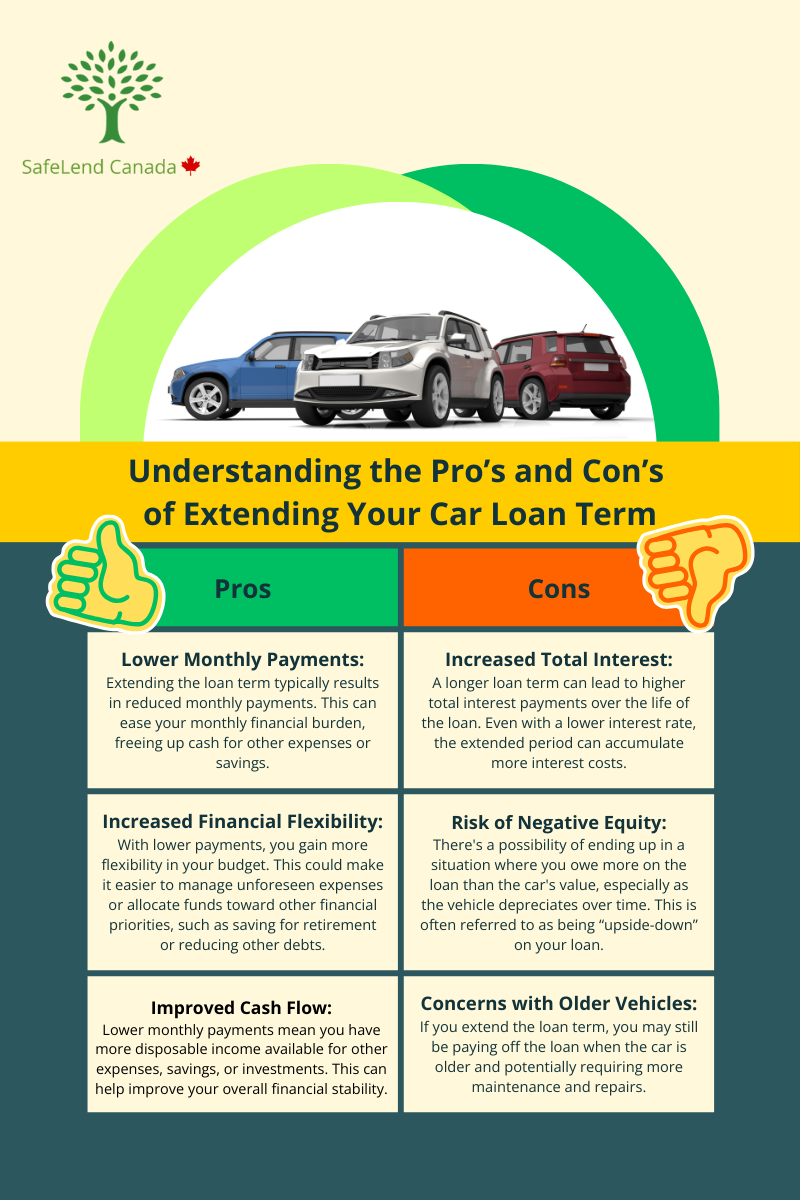
Potential Benefits of Extending Your Loan Term
Extending your loan term may offer:
- lower monthly payments, improving short-term cash flow
- more manageable budgeting if your financial situation has changed
- flexibility to redirect money toward savings or other financial priorities
For borrowers facing tight budgets, this can make vehicle ownership more manageable.
Potential Drawbacks to Consider
Extending your loan term may also increase the overall cost of your loan. Potential drawbacks include:
- higher total interest paid over time
- a longer repayment period
- increased risk of negative equity on a car loan if the vehicle depreciates faster than the loan balance
Because vehicles lose value over time, this strategy should be considered carefully.
Finding the Right Balance
The best approach depends on your financial goals. Some borrowers prioritize lower monthly payments, while others focus on reducing total interest and paying off their loan sooner.
Before refinancing, compare both your monthly payment and the total cost of the loan to determine what works best for your situation.
Key Takeaways on Car Loan Refinancing in Canada
Car loan refinancing can be a powerful way to lower your monthly payments, reduce interest costs, or improve your loan terms when used strategically.
When you refinance your loan, it’s important to understand how lenders and each financial institution will evaluate your refinance application, including your credit check, loan details, and overall financial profile.
When considering refinancing, keep the following in mind:
- review your current loan details before starting a loan application
- your credit score and credit check play a major role in rates and approval
- compare financing options across multiple lenders or through an online platform
- focus on total loan cost, not just monthly payments
- watch for fees or prepayment penalties

Refinancing may also depend on your vehicle’s equity position. Borrowers with positive equity may have more financing options, while those with negative equity may face additional limitations.
Refinancing should support your overall financial goals, whether that means improving cash flow, lowering costs, or restructuring your auto financing to better fit your current situation.
For many Canadians, platforms like SafeLend Canada simplify the process by connecting borrowers with multiple lenders and helping them explore the most suitable financing options.
Final Thoughts on Car Loan Refinancing
Car loan refinancing is not just about replacing a loan, it is about improving how your auto financing fits into your overall financial strategy.
By understanding how the refinance application process works, comparing lenders, and using an online platform to explore your financing options, you can make more informed decisions when you refinance your loan.
With the right approach, you can take greater control of your loan, improve your financial flexibility, and potentially reduce the long-term cost of vehicle ownership.
Frequently Asked Questions About Auto Loan Refinancing in Canada
What is auto refinancing and how does it work?
Auto refinancing means replacing your current car loan with a new loan that pays off the remaining balance. The new loan may offer a different interest rate, updated payment options, or a revised term. Many borrowers choose auto refinancing to lower monthly car payments, reduce interest charges, or better align their loan with their current financial situation.
Will auto refinancing hurt my credit score?
Auto refinancing may cause a small, temporary dip in your credit score because lenders review your full credit report during the application process. However, the impact is usually minimal. Making consistent payments on your new loan may help improve your credit situation over time.
Can I refinance my vehicle if I have bad credit?
Yes, vehicle refinancing may still be possible even if your credit situation is not perfect. Some lenders work with a range of credit profiles and consider factors beyond your credit score, including payment history, income stability, and vehicle details.
Can refinancing lower my monthly car payments?
Yes, refinancing may lower your monthly car payments depending on your new interest rate, loan amount, and repayment term. Some borrowers reduce payments by securing a lower rate, while others adjust their payment options by extending the loan term. Always compare total interest costs to ensure real savings.
Can I refinance if I am underwater on my loan?
Yes, refinancing may still be possible if you are underwater on your loan, meaning your loan balance is higher than your vehicle’s value. However, options may be limited. Lenders will closely review the loan amount and vehicle details before approving refinancing in these cases.
Is it better to refinance or trade in for a new vehicle?
This depends on your financial goals and loan balance. Refinancing may help lower interest charges and monthly payments while keeping your current vehicle. In contrast, trading in may involve rolling remaining debt into a new loan, which can increase total borrowing costs.
How long does vehicle refinancing take?
The refinancing process can vary by lender, but many borrowers can review options within a few days of applying. Once approved, the new lender typically pays off the existing loan and replaces it with a new loan agreement. If you have your documents ready, SafeLend Canada can process your application the same day.
Should I refinance my car loan in Canada?
Refinancing may make sense if you qualify for a lower interest rate, want to reduce your monthly payments, or improve your loan terms. Before proceeding, compare loan offers, review total borrowing costs, and ensure refinancing supports your financial goals.
What information do lenders need to refinance a car loan?
To evaluate your application, lenders typically review:
- your full credit report
- income and employment details
- current loan information
- vehicle details such as make, model, year, mileage, and value
These details help lenders assess risk and determine loan terms.
Ready to See If You Can Lower Your Car Loan Payment?
If you're curious whether refinancing could lower your interest rate or monthly car payments, SafeLend Canada offers a quick and secure refinance review.

Important Note: This article and its resources are purely for informational use. They do not reflect the offerings of specific companies or lenders. Our goal is to provide knowledge and insights for better financial decision-making. We recommend conducting in-depth research and seeking professional advice before making any financial decisions. SafeLend Canada, while not a lender, collaborates with various lenders to assist clients in refinancing their auto loans.