


May 2026 (Updated to reflect current Canadian auto refinancing trends and lender requirements.)
Published: April 2023
By: Danielle Burton
Category: Credit
When it comes to refinancing your auto loan, your credit score and credit report play a pivotal role. Lenders carefully review your financial history, including credit applications, collection accounts, and whether you've made payments on time. Missing a monthly payment or falling behind on minimum payments can lead to your debt being sent to collection agencies, which negatively affects your potential credit and future borrowing choices.
Thankfully, credit card companies and credit reporting agencies allow you to access your credit information, helping you understand how factors like soft inquiries, fraud alerts, and your original loan terms shape your credit profile. Reviewing your report gives you the opportunity to catch errors, establish payment plans, and build a path toward building credit over a period of time.
Stay informed and proactive—learning how to manage your credit effectively can boost your approval chances and unlock better loan terms. Read on to discover actionable strategies for improving your credit and refinancing success.
Table of Contents:
In this blog post, we will discuss the following:
- 1. What is a Credit Score?
- 2. What is a Credit Report?
- 3. Components of a Credit Report: What's Included?
- 4. How Credit Scores are Calculated: The Key Factors
- 5. The Impact of Credit History on Loan Applications
- 6. How to Read and Interpret Your Credit Report
- 7. How Lenders Use Credit Reports and Scores in Decision-Making
- 8. Maintaining Good Credit Behavior: Best Practices for Financial Success
What is a Credit Score?

A credit score is a key indicator of your financial history and creditworthiness, shaped by how consistently you've paid your bills on time, handled credit card companies, and managed credit applications. Lenders—including those offering auto loan refinancing—use this score, along with your credit report, to determine your borrowing choices and the risk involved in approving your loan.
A strong credit profile, built over a period of time through minimum payments, on-time monthly payments, and avoiding collection accounts, can lead to lower interest rates and better payment plans. On the other hand, missed payments or accounts sent to collection agencies can damage your score, limiting potential credit opportunities.
Lenders may also assess soft inquiries, fraud alerts, and your current original loan terms when evaluating applications. Staying proactive—like making payments on time, reviewing your report regularly, and correcting errors—can significantly improve your chances of building credit and securing approval.
Understanding the components of your score helps you navigate financial products with confidence. Keep reading to learn how small steps today can lead to better loan terms tomorrow.
What is a Credit Report?

A credit report provides an in-depth overview of an individual's credit history. This includes details about current loans, past auto loans, and their respective payments. Lenders review this report to assess an applicant's financial stability, which informs decisions on loan approvals, interest rates, and term durations. The report offers insights into a consumer's fiscal patterns, showcasing elements like monthly income, past credit behaviours, and any outstanding car loan amounts.
Lenders, financial institutions, and even some employers access these reports to gauge an individual's financial health and reliability. Decisions about loan approvals, interest rates, and credit limits often hinge on the insights derived from these reports. Different credit reporting agencies might have slightly varying methodologies, resulting in subtle differences in the credit scores they generate.
Regularly reviewing one's credit report is a prudent financial practice. It not only helps in detecting any anomalies or mistakes that might adversely impact one's credit score but also assists in understanding the factors affecting it. Whether it's monitoring the progress in improving one's credit or assessing the repercussions of financial decisions like taking a new loan or changing payment habits, a clear grasp of one's credit report aids consumers in making informed financial choices, from loan refinancing to selecting suitable credit products.
Components of a Credit Report: What's Included?
A credit report is an essential tool lenders and financial institutions use to evaluate a consumer's financial situation and make decisions regarding approvals, interest rates, and loan terms. The following are some of the key components found in a credit report:
- Personal Information: This includes the consumer's name, address, and Social Security number. It helps lenders verify the identity of loan applicants.
- Credit History: This section outlines the consumer's past and current loans, including auto loans, current car loans, and loan payments. It shows the consumer's credit management skills over time.
- Payment History: The report documents the consumer's history of on-time payments, late payments, and missed payments, which influences the chances of loan approval.
- Outstanding Debts: Current loan balances, including auto loan refinancing and original car loan amounts, are recorded in the credit report.
- Credit Inquiries: Soft credit pulls and hard credit inquiries are documented, with hard inquiries potentially impacting the credit score.
- Public Records: Any bankruptcies, tax liens, or civil judgments will appear in the credit report, potentially affecting a consumer's financial situation.
- Credit Score: The credit score is calculated based on the information in the credit report and reflects the consumer's creditworthiness. It can range from poor credit to excellent credit.
Lenders use credit reports to determine loan options, term lengths, and interest rates for consumers. Factors like annual income, credit history, and monthly car payments play a significant role in the decision-making process. By understanding the components of a credit report, consumers can make informed decisions regarding loan refinancing, pre-approvals, and other financial opportunities.
How Credit Scores are Calculated: The Key Factors
Credit scores are calculated using various factors, which help lenders determine the risk associated with lending money to consumers. The following key factors are considered when calculating credit scores:
- Payment History: Timely payments, including loan payments for auto loans and current car loans, contribute positively to the credit score. Lenders value on-time payments as a strong predictor of a consumer's ability to meet financial obligations.
- Credit Utilization: This factor considers the proportion of available credit being used by the consumer. High utilization rates may negatively impact credit scores, while low utilization rates demonstrate responsible credit management.
- Length of Credit History: A longer credit history, including previous car loans, provides lenders with more information about the consumer's financial situation and borrowing habits. A longer credit history is typically seen as a positive factor.
- Types of Credit: A diverse mix of credit types, such as auto loans, credit cards, and mortgages, can positively influence the credit score. Lenders prefer applicants with experience managing various types of credit.
- New Credit Inquiries: Multiple hard credit inquiries, such as those made during the auto loan refinance process, can negatively impact the credit score. On the other hand, soft credit checks do not affect the score. It's important to ask which one is being used before moving forward.
Lending partners may use credit scores to determine loan approval, interest rates, and term lengths. Factors like annual income, credit history, and monthly car payments play a significant role in the decision-making process. By understanding the key factors in credit score calculations, consumers can make informed decisions about loan refinancing, pre-approvals, and other financial opportunities.
The Impact of Credit History on Loan Applications
Credit history plays a significant role in loan applications, particularly for auto loans. Lenders consider credit history to assess the risk associated with loaning money to applicants. The following aspects of credit history can impact loan applications:
- Credit Score: A consumer's credit score reflects their financial situation and creditworthiness. Applicants with excellent credit are more likely to secure better financing terms, lower interest rates, and flexible loan terms. In contrast, those with poor or bad credit scores may face higher interest rates or difficulties in getting loan approval.
- Payment History: Lenders review the applicant's history of timely payments, including previous and current car loans. A consistent record of on-time payments demonstrates responsible financial behavior and increases the chances of approval because of their creditworthiness.
- Outstanding Debts: Current loan balances, including current car loans and other debts, can impact a lender's decision. High debt levels may negatively influence loan approval, while manageable debt levels may be viewed more favorably.
- Income and Employment: Stable income and employment are essential factors for loan approval. Lenders assess the applicant's annual income and job stability to determine their ability to make monthly car payments and repay the loan.
- Credit Inquiries: A high number of hard credit pulls may lower an applicant's credit score, while soft credit pulls have no impact. Excessive inquiries may raise concerns for lenders, affecting the loan approval process.
When applying for auto loans or pursuing auto refinancing offers, applicants should be mindful of their credit history and its impact on the application process. By maintaining a good credit score, making timely payments, and managing debts responsibly, consumers can increase their chances of securing favorable loan options and improve their financial and current credit situation.
How to Read and Interpret Your Credit Report
Understanding your credit report is essential for managing your financial situation and making informed decisions related to auto loans, refinancing, and other credit opportunities. Here's a guide on how to read and interpret your credit report:
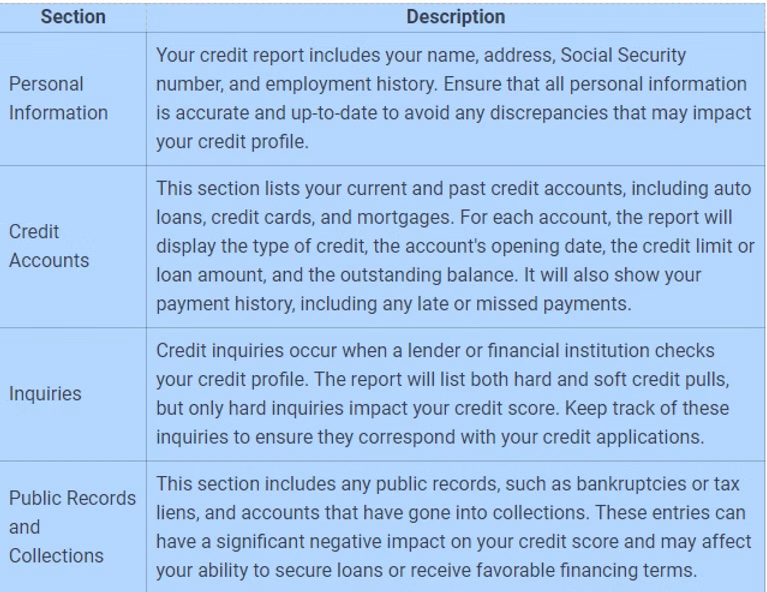

Regularly reviewing your credit report allows you to spot errors or discrepancies that may be affecting your credit score. Contact the credit bureau to resolve the issue if you find any inaccuracies or credit report errors. Understanding your credit report will help you make informed financial decisions, such as applying for auto loans, refinancing current car loans, or managing your overall financial situation.
What to Look For on Your Credit Report
Lenders use codes to send information to the credit bureaus about how and when you make payments.
These codes have two parts:
- A letter shows the type of credit you're using
- A number shows when you make payments
You may see different codes on your credit report depending on how you make your payments for each account.
For example:
- If you have a credit card account that you paid on time, it'll be reported as "R1"
- If you have lines of credit, and you missed a payment by 45 days, it'll be reported as "O2"
- If you have credit card debt and you're being contacted by a collection agency for payment, it'll be reported as "R9"
The best rating is 1. Any number higher than 1 will likely hurt your credit score.
How to Get a Free Credit Report
Order a copy of your credit report from both Equifax Canada and TransUnion Canada. Each credit bureau may have different information about how you have used credit in the past. Ordering your own credit report has no effect on your credit score.
Equifax Canada refers to your credit report as "credit file disclosure".
TransUnion Canada refers to your credit report as "consumer disclosure".
Order by mail or fax:
- Make your request in writing using the forms provided by Equifax and TransUnion
- Provide copies of two pieces of acceptable identification, such as a driver's license or passport
- You must receive your credit report by mail
Order by telephone:
- Call the credit bureau and follow the instructions
- Equifax Canada Tel: 1-800-465-7166
- TransUnion Canada Tel: 1-800-663-9980 (except Quebec) Tel: 1-877-713-3393 (Quebec residents)
- Confirm your identity by answering a series of personal and financial questions
- You may also need to provide your Social Insurance Number and/or a credit card number to confirm your identity
- You must receive your credit report by mail
How Potential Lenders Use Credit Reports and Scores in Decision-Making
When evaluating loan applicants, lenders use credit reports and scores to make informed decisions about the borrower's creditworthiness. Credit reports contain valuable information, such as credit history, payment history, and the number of active credit accounts or "tradelines". Credit scores, calculated using data from major credit bureaus, including Equifax, Experian, and TransUnion, play a crucial role in the decision-making process.
Auto loans are one type of credit that lenders assess using credit reports and scores. When reviewing auto loan applicants, lenders consider factors such as income, credit history, and financial situation. Applicants with excellent credit are more likely to receive favorable financing terms, while those with poor or bad credit may face higher interest rates or even loan denial.
The application process typically involves a credit check, or "pull," which can be either a soft or hard credit inquiry. Soft credit pulls do not impact credit scores, while hard inquiries may have a temporary negative effect. Lenders use this information to evaluate the applicant's credit profile and make quick decisions about approval, interest rates, and loan term lengths.
In addition to credit scores, lenders may also assess an applicant's financial situation by evaluating factors such as monthly income, annual income, and any decreases in income over time. This helps them determine the applicant's ability to make monthly car payments and fulfill the loan contract.
Some lending partners, like SafeLend Canada, specialize in auto loan refinancing solutions and offer services to help borrowers find the best auto refinance offers. By working with reputable lenders and lender partners, borrowers with various credit profiles can explore options for auto loan refinancing, potentially resulting in lower interest rates and more manageable loan payments, especially for those in financial hardship.
By understanding the factors that contribute to creditworthiness, borrowers can take steps to improve their credit profiles and increase their chances of securing favorable auto loan terms.

Maintaining Good Credit: Best Practices for Financial Success
Maintaining a good credit score on a regular basis is essential for financial success, as it affects various aspects of your financial life, such as auto loans, loan terms, interest rates, and approval chances. Here are some best practices for maintaining good credit:
- Pay your bills on time: Your payment history contributes significantly to your credit score, accounting for 35% of your FICO score calculation. Making timely payments, including loan payments and monthly car payments, helps build a positive credit history and supports a strong credit health profile.
- Keep credit utilization low: Aim to use only a small percentage of your available credit to maintain a healthy credit utilization rate. Lower credit utilization rates reflect responsible credit management and positively impact your credit score.
- Regularly monitor your credit report: Keep an eye on your credit report to identify any errors or discrepancies that may negatively affect your credit score. By addressing inaccuracies early, you can prevent potential issues with loan approvals, interest rates, and financing terms.
- Maintain a diverse credit mix: Having a variety of credit types, such as auto loans, credit cards, and mortgages, can contribute to a better credit score. Responsible management of different credit accounts demonstrates your ability to handle various financial responsibilities.
- Limit hard credit inquiries: While soft inquiries credit pulls do not impact your credit score, hard inquiries may have a temporary negative effect. Limit the number of hard inquiries by applying for credit only when necessary and considering pre-approval options when available.
By following these best practices, you can maintain a healthy credit score, which can lead to numerous benefits, such as lower interest rates on auto loans, favorable loan terms, and increased chances of approval with reputable lenders and lending partners. Maintaining good credit can also result in better auto loan refinancing solutions, helping you save money and achieve long-term financial success.
Conclusion

In conclusion, understanding your credit report and score is crucial for making informed financial decisions and achieving financial success, as lenders use this information to make decisions on loan approvals and financing terms. However, some lenders like SafeLend Canada offer auto loan refinancing solutions without relying on your credit. By maintaining good credit practices and taking advantage of resources like auto refinance calculators and pre-approval processes, you can improve your chances of accessing better lending options and achieving financial success, regardless of your credit history. Remember, a strong credit history and excellent credit score can open doors to better financial opportunities and help you take control of your financial future.
Important Note: This article and its resources are purely for informational use. They do not reflect the offerings of specific companies or lenders. Our goal is to provide knowledge and insights for better financial decision-making. We recommend conducting in-depth research and seeking professional advice before making any financial decisions. SafeLend Canada, while not a lender, collaborates with various lenders to assist clients in refinancing their auto loans.